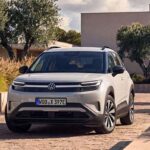
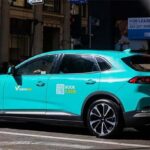
The BMW iX3 vs Volvo EX60 debate is one of the most interesting in the electric SUV segment right now. Two genuinely next-generation platforms. Two very different personalities. And both landing in US showrooms in the same year.
According to Benchmark Mineral Intelligence data reported by Electric Cars Report, global EV sales hit 4 million units in Q1 2026 alone. Buyers have more choices than ever, but the iX3 and EX60 stand out because both are built on brand-new platforms, both charge at 800V, and both are pitched at exactly the same buyer.
The BMW iX3 just won both 2026 World Car of the Year and World Electric Vehicle, beating 57 competitors judged by 98 journalists across 33 countries. The Volvo EX60 arrived with up to 400 miles of range, native Tesla Supercharger access, and a cabin built around Scandinavian calm.
So which one is actually right for you? Let’s find out.
Which Electric SUV Goes Furthest on a Charge?
The BMW iX3 leads on range across both trim levels, delivering up to 434 miles in the 50 xDrive and 395 miles in the entry-level 40. The Volvo EX60 reaches 400 miles only in its top P12 AWD trim, while the base P6 manages 307 miles. If consistent, high range across every trim is important to you, the iX3 is the safer bet.
TThe 2027 BMW iX3 50 xDrive runs a 109 kWh battery paired with BMW’s sixth-generation eDrive technology. Cylindrical cells and an 800V architecture push the EPA estimate to 434 miles in optimal configuration. The entry-level iX3 40 uses an 82.6 kWh usable pack and still delivers up to 395 miles. That’s a strong floor.
Volvo’s range story depends heavily on your trim choice. The EX60 lineup spans three battery sizes: the P6 at 80 kWh delivers up to 307 miles, the P10 AWD at 91 kWh reaches around 320 miles, and the P12 AWD at 112 kWh hits 400 miles. That headline 400-mile figure only applies to the most expensive option.
Both cars use 800V architecture, which helps maintain range estimates more consistently at highway speeds than older 400V systems.
How Fast Do They Charge?
The BMW iX3 peaks at 400 kW, adding around 185 miles in 10 minutes. The Volvo EX60 peaks at 370 kW and adds roughly 173 miles in the same window. But the EX60 completes a 10-to-80% charge faster on the clock, finishing in 16 to 19 minutes versus the iX3’s 21 minutes. Both are genuinely fast, and both use a native NACS port for direct Supercharger access.
That NACS port matters a lot. Both vehicles plug directly into Tesla’s Supercharger network, now over 29,000 stations across the US, with no adapter needed. For road trippers, that’s the most practical charging upgrade either brand has ever offered.
The iX3 50 xDrive hits its 400 kW peak at compatible DC fast chargers and sustains a high acceptance rate thanks to its thermal management. BMW’s 800V system reduces heat buildup during fast charging sessions, keeping the battery accepting power more consistently from start to finish.

The Volvo EX60 peaks at 370 kW but its 10-to-80% window of 16 to 19 minutes is tighter than the iX3’s 21 minutes. That tells you the EX60 manages its charge curve efficiently throughout the session. Both cars also support bidirectional charging, so you can power devices or feed energy back to your home when parked.
Pricing and Trims: Which Offers Better Value?
The Volvo EX60 starts $3,100 cheaper than the BMW iX3, opening at $58,400 versus $61,500. Volvo also gives you three trim levels to choose from, while BMW’s US lineup currently offers one confirmed trim at launch. If entry price or trim flexibility matters, the EX60 has the edge.
BMW iX3
– iX3 40 (RWD, 395 mi): from £53,250 UK, US pricing TBC
– iX3 50 xDrive (AWD, 434 mi): from $61,500
Volvo EX60
P6 Plus (RWD, 307 mi): from $58,400
P10 AWD (320 mi): around $60,000
P12 AWD (400 mi): pricing TBC, arriving later
The EX60’s three-tier structure means you can get into the brand at a lower price and upgrade later. The P6 at $58,400 is a real entry point. The P10 sits close to the iX3’s starting price and offers AWD. And the P12 is the performance flagship when you’re ready for it.
For buyers not yet ready for the $60,000+ bracket, our guide to 300+ mile EVs under $50K covers strong alternatives worth considering.
Performance and Driving Character
This is where the two cars separate most clearly. The BMW iX3 is built to drive. The Volvo EX60 is built to travel in comfort, although it can also be very fast when you want it to be.
The iX3 50 xDrive puts out 463 hp and 476 lb-ft of torque, reaching 60 mph in 4.7 seconds. It won 2026 World Car of the Year not just on spec, but because of how it drives. Judges praised its balance, responsiveness, and the way the new Heart of Joy control unit sharpens steering and throttle feel by reacting up to ten times faster than previous BMW hardware.
The EX60 spans a much wider performance range. The base P6 delivers 369 hp and a 5.7-second 0-60 run. The P10 AWD steps up to 503 hp with a 4.4-second sprint. And the P12 AWD produces 670 hp and 585 lb-ft of torque, covering 0-60 in just 3.8 seconds. That makes the P12 significantly more powerful than any iX3 trim.
On practicality, the EX60 tows up to 4,500 pounds and the iX3 50 xDrive tows up to 4,400 pounds. Both are five-seat SUVs with a frunk and competitive cargo volume.
Inside the Cabin: Tech, Safety, and Comfort
Both cars represent a genuine generational leap in software, but they take opposite paths to get there.
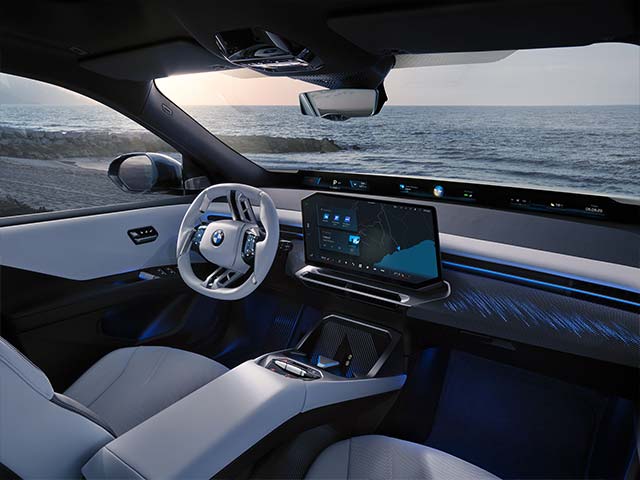
BMW’s iX3 puts technology front and center. The Panoramic iDrive system is a full-width display integrated into the base of the windscreen. The upgraded Intelligent Personal Assistant runs on large language model technology and connects to Amazon Alexa+. The new electronics architecture uses four high-performance processors delivering over 20 times the computing power of previous BMW systems. It feels fast, precise, and deliberately driver-focused.
Volvo’s EX60 takes the opposite approach. The cabin is defined by earthy tones, natural materials, and a deliberate calm. The new HuginCore computing platform, developed with Google, Nvidia, and Qualcomm, runs everything from sensors to software in one unified system. The EX60 is the first Volvo to come with Google’s Gemini AI as the standard voice assistant. The experience feels effortless rather than impressive.
Safety is a Volvo hallmark, and the EX60 continues that tradition with a full suite of advanced driver assistance systems carried over from the XC60, one of the safest cars on the road for many years running. BMW’s safety suite on the iX3 is equally comprehensive, covering active lane keeping, front collision warning, and automatic emergency braking.
Both cars receive over-the-air software updates and both support bidirectional charging.
Which One Is the Right Electric SUV for You?
The BMW iX3 is the right choice if you want the longest range across every trim, a prestige badge, and a driving experience that earned the world’s top automotive award. The Volvo EX60 is the right choice if you want more powertrain flexibility, a lower entry price, a faster 10-to-80% charge time, and a cabin that feels genuinely restful on long drives.
Here’s the head-to-head in one place:
| BMW iX3 50 xDrive | Volvo EX60 P6 | Volvo EX60 P12 | |
| Starting price | $61,500 | $58,400 | TBC |
| Range | 434 miles | 307 miles | 400 miles |
| Peak charging | 400 kW | 370 kW | 370 kW |
| 10-to-80% time | 21 min | 19 min | 16 min |
| Top power | 463 hp | 369 hp | 670 hp |
| Towing | 4,400 lb | 4,500 lb | 4,500 lb |
| NACS port | Yes | Yes | Yes |
If you’re a driving enthusiast who wants the longest-range option at every trim level and the badge of a World Car of the Year winner, the iX3 is your car. If you’re a family buyer who wants to start lower and upgrade over time, or who values a calmer interior and a faster clock-to-80% charging session, the EX60 wins. Neither is a wrong answer.
Want to see how both stack up against the wider field? Our three-row electric SUV comparison covers the larger family haulers if you need more seats.
Conclusion
The 2027 BMW iX3 and Volvo EX60 are two of the best electric SUVs on the market right now, full stop. Both charge at 800V, both access the Tesla Supercharger network natively, and both are built on brand-new platforms designed for the next decade of EV ownership.
The iX3 is the prestige pick with the range advantage and a World Car of the Year trophy to its name. The EX60 is the family-focused choice with more trims, a lower entry point, and a cabin that makes every mile feel effortless.
Bookmark this page as both models continue to roll out across US dealers through 2026 and 2027. And check back with Electric Cars Report for specs updates, first drive impressions, and real-world range tests as both hit the road.
Frequently Asked Questions
Which has more range, the BMW iX3 or the Volvo EX60?
The BMW iX3 has the edge on range across its lineup. The iX3 50 xDrive delivers up to 434 miles and the entry iX3 40 reaches 395 miles. The Volvo EX60 hits 400 miles only in the top P12 AWD trim, while the base P6 delivers 307 miles. If you want strong range at every price point, the iX3’s floor is higher.
Which is cheaper, the BMW iX3 or the Volvo EX60?
The Volvo EX60 starts at $58,400 for the P6 Plus trim, which is $3,100 less than the BMW iX3 50 xDrive at $61,500. Volvo also offers three trim levels compared to BMW’s two, giving you more room to find a configuration that fits your budget.
Does the BMW iX3 use the Tesla Supercharger network?
Yes. The 2027 BMW iX3 comes with a native NACS port, giving it direct access to Tesla’s Supercharger network with no adapter required. The Volvo EX60 also uses NACS as standard, making both vehicles compatible with over 29,000 Supercharger stations across the US.
How does the Volvo EX60 charging speed compare to the BMW iX3?
Both cars charge at 800V. The BMW iX3 peaks at 400 kW and completes 10-to-80% in around 21 minutes. The Volvo EX60 peaks at 370 kW but finishes 10-to-80% in 16 to 19 minutes, making it faster on the clock despite a lower peak rate. Both support bidirectional charging.
Which won the 2026 World Car of the Year, the BMW iX3 or the Volvo EX60?
The BMW iX3 won the 2026 World Car of the Year and the 2026 World Electric Vehicle award at the New York International Auto Show. A jury of 98 journalists from 33 countries voted it the winner out of 57 competitors. It’s the first time BMW has won both awards in the same year.