
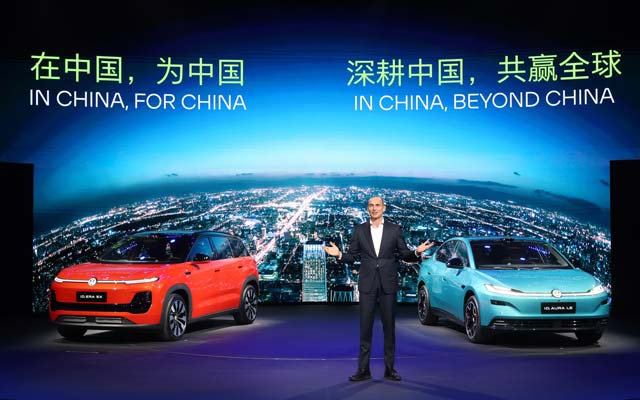
Volkswagen Group has unveiled VEGA, a new technology stack developed in China that combines electric vehicle platforms, vehicle software architecture and advanced driver assistance systems (ADAS).
Announced at the company’s first Tech Day in China, the initiative marks a major step in Volkswagen’s efforts to accelerate vehicle development, strengthen its position in the world’s largest automotive market and export China-developed technologies to other regions.
Under its evolving “In China, Beyond China” strategy, Volkswagen plans to expand exports of China-built vehicles and locally developed technologies to markets across the Global South. The initiative builds on the company’s previous “In China, for China” strategy, positioning its Chinese operations as both a key innovation center and an increasingly important export hub.
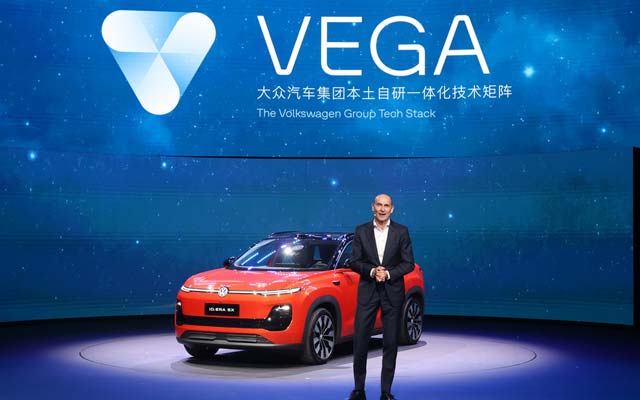
Volkswagen VEGA Technology Stack Combines Three Core Technologies
Named after one of the brightest stars in the northern hemisphere, VEGA brings together three core technology pillars: next-generation vehicle platforms, the China Electronic Architecture (CEA) and advanced driver assistance systems.
Developed by Volkswagen Group China, the integrated system is designed to shorten development cycles, improve cost efficiency and allow faster software and hardware updates tailored to Chinese customers. Volkswagen says the approach combines local technological expertise with its established engineering, safety and quality standards.
Oliver Blume, CEO of Volkswagen Group, described China as an increasingly important innovation and technology hub for the company’s global operations. The new strategy is intended to accelerate the development of intelligent and electrified vehicles in China while making those technologies available in other markets.
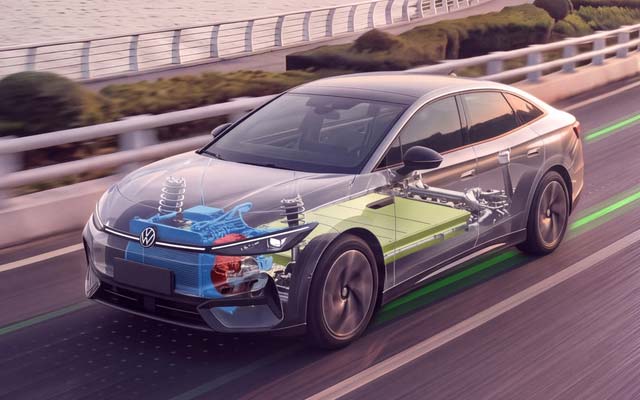
CMP and CSP Platforms Target Greater EV Range and Faster Charging
Two locally developed vehicle platforms form a central part of Volkswagen’s new technology strategy: the Compact Main Platform (CMP) and the China Scalable Platform (CSP). Both are designed for the software-defined vehicle era and integrate with the China Electronic Architecture.
The CMP platform targets compact A-segment battery-electric vehicles (BEVs) and plug-in hybrid electric vehicles (PHEVs). Volkswagen says its most efficient configuration can deliver more than 600 kilometers of range under China’s CLTC testing cycle, with energy consumption of approximately 11 kWh per 100 km. Charging from 30% to 80% is expected to take around 25 minutes.
The larger CSP platform is intended for full-size and flagship vehicles, including battery-electric models and extended-range electric vehicles (EREVs). Volkswagen targets more than 800 km of range for its most efficient BEV configurations, with energy consumption below 13 kWh per 100 km. EREVs could achieve a combined range exceeding 1,500 km.
The CSP platform also features a high-voltage architecture exceeding 850 volts, enabling a claimed charging time of just 13 minutes to go from 10% to 80%. These figures are manufacturer targets and specifications, and real-world performance will depend on the final vehicle configuration, charging conditions and driving environment.
Volkswagen is also emphasizing driving dynamics. The CMP platform features a 54:46 front-to-rear weight distribution and multi-link rear suspension, while the CSP platform is designed to combine the maneuverability of a smaller vehicle with the performance expected from larger models. Volkswagen cites a turning radius below 5.5 meters and acceleration from 0 to 100 km/h in 4.1 seconds for CSP applications.
Volkswagen Highlights Extensive Vehicle Safety Testing
Volkswagen says its CMP and CSP platforms undergo a demanding validation process known as the Volkswagen Group Super Cycle, which goes beyond China’s national testing requirements.
The program includes material analysis, component testing, whole-vehicle verification and durability simulations. One test rig reproduces road loads equivalent to 15 years and 300,000 kilometers of driving. Volkswagen also uses extensive proving-ground facilities, high-speed stability testing and dynamic corrosion testing to assess vehicle durability under different conditions.
Safety systems are another priority. Volkswagen says its Motor Traction Limiter system can reduce motor power output within five milliseconds following a severe collision. The high-voltage battery system is designed to discharge to a safe voltage level within five seconds, compared with the 60-second requirement cited by the company.
According to Volkswagen, these engineering measures are intended to help vehicles based on the CMP and CSP platforms achieve five-star ratings under China’s C-NCAP program and a “Good” result across all C-IASI safety categories. Actual ratings will depend on the individual vehicle and its completed assessments.
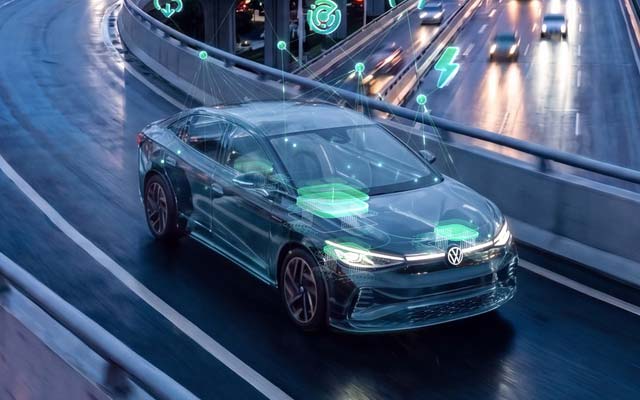
China Electronic Architecture Brings Software Updates and AI Features
The China Electronic Architecture, or CEA, is another key component of VEGA. Volkswagen describes it as an in-house electronic architecture designed to support software-defined vehicles across a broad range of vehicle sizes and powertrains.
CEA is built around a schedule of major software capability updates every three months, with a more comprehensive architecture upgrade planned every two years. This approach is intended to help vehicles gain new capabilities throughout their ownership period rather than relying solely on the technology installed at the factory.
In 2026, Volkswagen says CEA has been deployed in five locally produced electric models: the ID. UNYX 06, ID. UNYX 07, ID. ERA 5X, ID. AURA` T6 and ID. AURA L5.
The company plans to extend CEA to locally produced plug-in hybrid and internal combustion engine models in 2027. A major update is also expected to bring centralized computing for the cockpit and ADAS functions, targeting Level 3 automated-driving technology readiness and deeper integration of AI agents.
By 2029, Volkswagen plans to evolve CEA into an architecture based on agentic AI, supporting more advanced automated-driving capabilities and closer integration with everyday digital services. These are future development targets rather than confirmation that Level 3 or Level 4 automated driving is currently available across the vehicle lineup.
Volkswagen Uses AI to Accelerate Software Development
Volkswagen is also using artificial intelligence to speed up software development and testing through C-Brain, its in-house AI-powered toolchain.
The system supports engineering design, code generation, testing and validation. Volkswagen says some software feature tests that previously required up to three days can now be completed in two to three hours.
The company also reports that software issue diagnosis and resolution, including the process through version release, can be reduced from approximately two weeks to around 20 minutes in the relevant workflow. These improvements could help Volkswagen respond more quickly to software problems and deliver updates more efficiently.
AI agents have also been introduced across CEA-powered models, according to Volkswagen, supporting natural voice interaction for vehicle controls, trip planning and entertainment. The company says privacy protection is incorporated into the system’s design.
Volkswagen Expands Advanced Driver Assistance in China
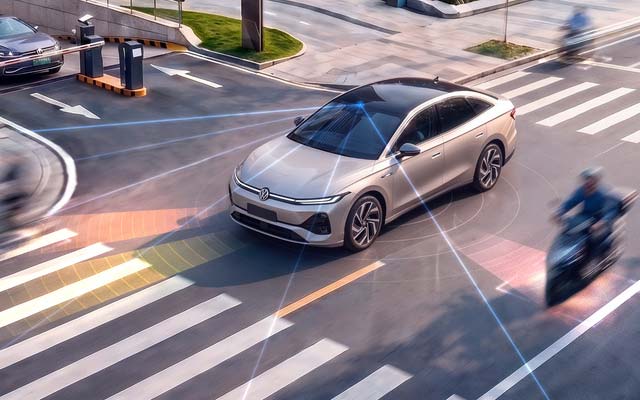
Advanced driver assistance systems are another major focus of Volkswagen’s China technology strategy. Through its local intelligent-driving operation, CARIZON, the company has introduced Hyper Sense 8 (HS8), an in-house-developed, full-scenario Level 2++ driver assistance solution.
Designed for China’s complex urban and highway environments, HS8 supports Navigation on Autopilot functions on both city streets and highways, along with parking assistance across a range of scenarios.
Volkswagen plans to equip seven new new-energy vehicle models across its three Chinese joint ventures with HS8 in 2026.
The system’s development is supported by GAIA 2.0, Volkswagen Group China’s AI world model, which simulates a wide range of driving situations. Volkswagen says its simulations cover the equivalent of five million kilometers of driving each day, using up to 30 million driving-scenario clips.
The company aims to increase this simulated training volume to the equivalent of 10 million kilometers per day for future Level 3 automated-driving development. The objective is to expose the system to rare and challenging scenarios before they occur in real-world driving.
Volkswagen is targeting Level 3 automated-driving technology readiness in 2027 and is developing its own C7H system-on-chip for future Level 4-ready applications. The company has also secured a Level 3 autonomous-driving road-test permit in Hefei, China, allowing further on-road testing and data collection.
These developments highlight Volkswagen’s push to compete in China’s rapidly evolving intelligent-vehicle market, where software capabilities and driver assistance technology have become increasingly important factors for buyers.
Volkswagen’s “In China, Beyond China” Strategy Expands Exports
Beyond its domestic Chinese operations, Volkswagen intends to turn its local research, development and manufacturing capabilities into a broader international advantage.
The company has already begun exporting China-produced Volkswagen and JETTA vehicles to markets including the Middle East, Uzbekistan, Kazakhstan and Sub-Saharan Africa. Mexico, Egypt and Vietnam are expected to follow by the end of 2026, with additional markets across Southeast Asia, South America and Africa planned in the coming years.
Volkswagen also intends to export technologies developed in China, rather than limiting its international expansion to finished vehicles.
The CMP platform, integrated with CEA, is expected to become a technological foundation for next-generation Volkswagen vehicles in selected Global South markets. Its flexible design supports different powertrain configurations, including new-energy vehicles, conventional internal combustion vehicles and hybrid models.
South America is expected to be the first region to introduce China-developed technologies into its local Volkswagen portfolio before the end of the decade. Volkswagen is also considering extending these solutions to other markets, including South Africa.
This strategy could allow the company to adapt vehicles more quickly to regional requirements while benefiting from the development speed and cost efficiencies achieved in China.
What Volkswagen’s VEGA Strategy Means for the Global EV Market
Volkswagen’s VEGA technology stack reflects a broader shift in the automotive industry, where software, electronics, artificial intelligence and vehicle platforms increasingly determine how quickly manufacturers can develop competitive products.
By integrating these technologies within a locally developed system, Volkswagen aims to improve its competitiveness in China while creating solutions that can be deployed internationally. The CMP and CSP platforms address different vehicle segments, while CEA and the company’s AI-powered development tools are designed to accelerate software updates and intelligent-driving development.
The most significant development may be the move from importing established Volkswagen technologies into China toward exporting Chinese-developed platforms, software and vehicles to other regions.
If Volkswagen meets its stated range, charging, software and development targets, VEGA could become an important part of the company’s strategy to compete with domestic Chinese automakers and expand its presence in emerging EV markets.
For global buyers, the longer-term impact will depend on which China-developed technologies reach their local markets, how competitively priced the resulting vehicles are and whether the promised efficiency, charging and software benefits translate into production models.


