Mercedes-Benz is is executing its biggest portfolio rollout ever, bringing more than 40 new models to market in under three years by late 2027. The automaker is accelerating the development of electric vehicles, hybrid powertrains and next-generation battery technologies as it looks to meet different customer needs across global markets.
The strategy combines more than 140 years of engineering experience with digital development, modular vehicle platforms and advanced software. Rather than focusing on a single powertrain technology, Mercedes-Benz plans to offer a mix of fully electric and hybrid vehicles across its model lineup.
At the center of this approach is the Mercedes-Benz Operating System (MB.OS), which integrates key vehicle functions into a unified, upgradeable software architecture. The system is designed to deliver a consistent driving experience across different models and powertrains, combining comfort, safety, performance and precision.
Mercedes-Benz Accelerates Powertrain Development
Mercedes-Benz is developing its powertrains around real-world driving requirements rather than relying on a single technical solution for every vehicle. The goal is to balance performance, efficiency and comfort, whether a vehicle is driven on the motorway, through city streets or on demanding routes.
The development process begins with an analysis of customer driving habits, including acceleration, towing, hill starts and everyday driving cycles. Engineers then use digital simulations to evaluate different combinations of power, torque, gear ratios and control systems before physical components are produced.
The most promising configurations move to test benches, where they are evaluated under different temperatures and operating loads. Vehicle testing follows to confirm performance in real-world conditions.
Mercedes-Benz also develops suspension, braking and steering systems alongside each powertrain. This integrated approach is intended to preserve the brand’s characteristic driving dynamics across its expanding range of electric and hybrid vehicles.
Modular Platforms Support Electric and Hybrid Models
A key part of Mercedes-Benz’s strategy is the use of modular powertrain technology that can be adapted to different vehicle sizes and segments. Sharing components and software architectures can accelerate development while helping reduce engineering and manufacturing costs.
For combustion-engine vehicles, the company’s FAME (Family of Modular Engines) family includes petrol and diesel hybrid applications. These engines use technologies such as an integrated starter-generator, an aluminium engine block with NANOSLIDE cylinder coatings and advanced turbocharging systems.
The modular architecture allows the technology to serve vehicles ranging from the GLA to the flagship S-Class, with performance and efficiency tailored to each model.
For electric vehicles, Mercedes-Benz is developing a scalable architecture derived in part from its VISION EQXX efficiency program. The technology is intended for models including the CLA, CLA Shooting Brake, GLB, GLA, GLC and C-Class.
The company also plans to extend its 800-volt electric architecture to larger vehicles, including future E-Class and S-Class applications.
An 800-volt electrical system can support high charging power and help reduce electrical losses, although actual charging speeds depend on the vehicle, battery temperature and charging station. By integrating the battery, electric drive unit, thermal management and charging system, Mercedes-Benz aims to improve overall energy efficiency.
Mercedes-Benz Develops Its Own Electric Drive Unit
The electric drive unit 2.0 (EDU 2.0) is one of the central technologies in the company’s next generation of electric vehicles. Mercedes-Benz developed the system in-house and manufactures it through its powertrain production network.
Designed around an 800-volt architecture, the drive unit uses silicon-carbide components in its inverter to improve efficiency. The system also incorporates a two-speed gearbox with a dog clutch, helping balance acceleration, high-speed performance and energy consumption.
This approach is intended to deliver more than efficiency gains measured in laboratory tests. The system has been engineered to balance torque delivery and energy use across a wider range of real-world driving conditions.
Its compact construction also helps create additional packaging flexibility inside the vehicle, supporting cabin space and interior design.
New Battery Chemistry Could Improve EV Range and Reduce Costs
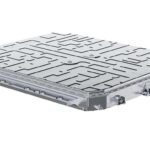
Battery technology remains another major focus for Mercedes-Benz as it works toward improving electric vehicle range, charging performance and affordability.
The automaker is investigating several battery chemistries designed to meet different requirements across its model range. One development combines lithium manganese oxide (LMO) with nickel manganese cobalt oxide (NMC), increasing the proportion of manganese while reducing the amount of cobalt and nickel.
The aim is to achieve a balance between energy density and production costs while preparing for future manganese-rich battery technologies.
Mercedes-Benz is also advancing lithium nickel manganese oxide (LNMO) chemistry. This technology could eliminate cobalt and reduce nickel requirements compared with conventional NMC batteries, while offering the potential for high energy density.
The company says LNMO cells could potentially deliver up to 30% more range than lithium iron phosphate (LFP) batteries at comparable weight and packaging space. That figure represents a development target rather than a guaranteed improvement in production vehicles, with the final result depending on cell design and vehicle integration.
Beyond range, Mercedes-Benz wants to develop battery systems that are lighter and more compact without sacrificing performance. Such improvements could create additional flexibility in vehicle design while reducing dependence on certain critical raw materials.
Developing its own battery technology platforms also gives the company greater control over how future cells are adapted to changing market conditions and regulatory requirements.
Solid-State Batteries Move Closer to Real-World Testing
Mercedes-Benz is also working to advance solid-state batteries through partnerships with Factorial Energy and ProLogium.
One of the most notable milestones came when the company tested an EQS development vehicle equipped with a lithium-metal solid-state battery developed with Factorial Energy. The vehicle covered 1,205 kilometres (approximately 749 miles) between Stuttgart, Germany, and Malmö, Sweden, without recharging.
The journey demonstrated the potential of solid-state battery technology to support exceptionally long driving distances. However, the result came from a development vehicle and should not be interpreted as the expected range of a production EQS.
Solid-state batteries are attracting interest because they could offer improvements in energy density, packaging and safety, depending on the chemistry and design. Significant challenges remain, including manufacturing costs, durability and the ability to produce cells at scale.
Mercedes-Benz is evaluating next-generation cells from ProLogium and other partners, examining performance, thermal behaviour and safety. The company is also testing other partner-developed and in-house technologies, with expertise from its motorsport engineering teams contributing to the research.
The objective is to determine which technologies could eventually meet the requirements for series production.
Formula 1 Technology Helps Develop More Efficient Engines
Mercedes-Benz is using knowledge from motorsport to improve the performance and efficiency of its production powertrains.
The company works closely with Mercedes-AMG High Performance Powertrains (HPP), its British-based powertrain division responsible for developing and manufacturing Formula 1 engines and related systems.
Rather than simply transferring individual components from the racetrack to road cars, the collaboration focuses on sharing engineering expertise, development methods and approaches to improving efficiency.
One example is the electric exhaust-gas turbocharger introduced in the company’s latest M 252 LS petrol engine.
New Electric Turbocharger Boosts Mercedes-Benz Hybrid Performance
The M 252 LS is a further development of Mercedes-Benz’s 1.5-litre petrol engine and produces 170 kW from the combustion engine, supplemented by 23 kW of electrical assistance. Mercedes-Benz describes it as the most powerful four-cylinder engine in its compact class.
The engine is also the first Mercedes-Benz engine to feature a 5 kW electric exhaust-gas turbocharger powered by the vehicle’s 48-volt electrical system.
Derived from technology developed through the company’s Formula 1 experience, the electrically assisted turbocharger is designed to improve responsiveness across the engine’s rev range. It helps reduce the delay associated with conventional turbocharging while supporting more immediate acceleration.
In the GLB 250, the M 252 LS is reported to accelerate approximately 0.1 seconds faster than the previous-generation GLB 250 equipped with the M 260 engine. Mercedes-Benz also reports around a 17% reduction in CO₂ emissions compared with the predecessor.
The electric turbocharger can additionally recover energy from the exhaust system, converting some otherwise wasted energy into electricity. Two Lanchester balance shafts further reduce engine vibrations to improve refinement.
The technology illustrates how Mercedes-Benz is continuing to develop combustion engines alongside its electric vehicle programs, rather than relying exclusively on battery-electric propulsion.
Mercedes-Benz Bets on Powertrain Diversity Through 2027
Mercedes-Benz’s plans for more than 40 new models by the end of 2027 highlight a strategy built around technological flexibility. The company is expanding its electric vehicle architecture, refining hybrid engines, researching advanced battery chemistries and drawing on Formula 1 engineering to improve production vehicles.
The scale of the planned rollout also places greater importance on modular platforms and software integration. Shared technologies can help the automaker develop new vehicles more efficiently while adapting each model to different customer expectations.
For electric vehicles, the priorities include more efficient drive units, high-voltage architectures, improved battery chemistry and the eventual introduction of solid-state technology if it meets production requirements.
For hybrid vehicles, advances such as electric turbocharging aim to improve responsiveness and fuel efficiency while retaining the flexibility of combustion-engine powertrains.
With the automotive industry continuing to evolve, Mercedes-Benz is positioning itself to offer multiple solutions rather than committing to one technology for every market. The success of the strategy will ultimately depend on how effectively these engineering developments translate into competitive vehicles, real-world efficiency gains and tangible benefits for customers.