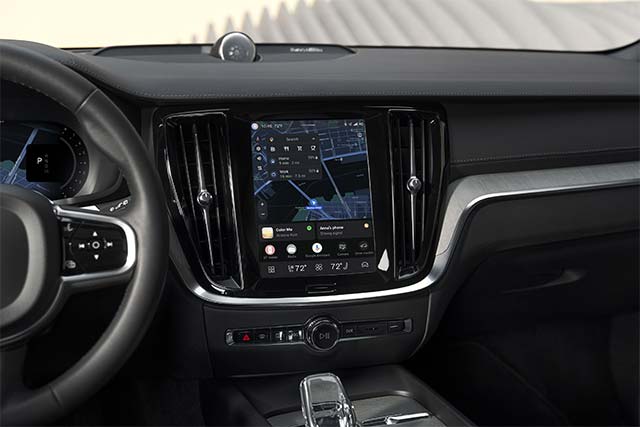
Volvo Cars is rolling out its biggest over-the-air (OTA) software update to date, delivering a redesigned and more intuitive infotainment experience to approximately 2.5 million vehicles across 85 countries.
Starting this week, eligible Volvo models equipped with Google built-in — including vehicles produced as far back as 2020 — will receive the new “Volvo Car UX” free of charge. The move underscores Volvo’s strategy of continuously improving its cars through software, enhancing functionality long after customers drive off the lot.
A Faster, More Intuitive Interface
Built on Android Automotive and deeply integrated with Google services, the new user experience focuses on simplicity and speed. The refreshed layout significantly reduces the number of taps required to access core features such as navigation, media and phone controls.
The home screen now places the most-used apps front and center. Drivers following directions in Google Maps can now adjust media without exiting navigation — a small but meaningful upgrade that improves everyday usability.
A new contextual bar dynamically adapts to driving conditions. For example, when maneuvering at low speeds, quick access to exterior cameras appears automatically, helping drivers in tight spaces.
Consistent Design Across the Lineup
One of the most significant aspects of this OTA rollout is consistency. Whether driving a three-year-old Volvo XC40 or the flagship Volvo EX90, customers will experience the same modern design philosophy and intuitive layout.
This harmonized interface reflects years of development in Volvo’s in-house tech stack and aligns the brand’s growing electric and hybrid lineup under a unified digital experience.
Enhanced Control for Plug-in Hybrid Drivers
For plug-in hybrid owners, the update makes accessing electric driving modes simpler than ever. The “Drive Modes” shortcut is now available directly from the home screen, allowing one-tap access to “Pure” mode for electric-only driving. The streamlined control helps drivers maximize electric range and reduce fuel consumption.
New Digital Feature Purchases and Future AI Integration
In addition to the UX upgrade, Volvo will enable customers with Google built-in — but without Pilot Assist — to purchase and download the advanced driver assistance feature directly to their vehicles.
The update also prepares compatible models for integration with Google Gemini, Google’s next-generation conversational AI, expected to arrive later this spring. The move positions Volvo vehicles for a more advanced voice-controlled experience in the near future.
Software-Defined Vehicles at Scale
With 2.5 million vehicles receiving the update, this marks one of the most comprehensive infotainment upgrades in the industry. It reinforces Volvo’s transition toward software-defined vehicles, where continuous improvements are delivered seamlessly over the air.