
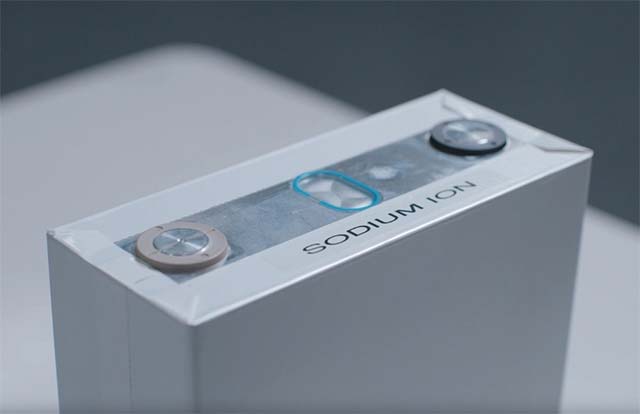
As electricity demand accelerates and AI-powered data centers place increasing pressure on power grids, General Motors is expanding its battery strategy beyond electric vehicles. The automaker has announced a new partnership with startup Peak Energy to develop sodium-ion battery technology specifically designed for large-scale energy storage systems.
Backed by a strategic investment from GM Ventures, the collaboration reflects a growing industry shift toward battery chemistries optimized for stationary energy storage rather than vehicle applications. While lithium-ion batteries remain dominant, GM believes sodium-ion technology could play a major role in the future of grid-scale energy infrastructure.
Why GM Is Betting on Sodium-Ion Batteries
For years, battery innovation has focused on improving energy density, charging speeds, and driving range—critical factors for electric vehicles. Grid operators, utilities, and data center operators, however, prioritize different metrics. Their focus is on reliability, durability, affordability, and long-term operating costs.
According to GM, sodium-ion batteries offer several advantages that make them particularly attractive for stationary energy storage.
Sodium is one of the most abundant elements on Earth, estimated to be roughly 1,000 times more plentiful than lithium. This abundance could help reduce material supply constraints while lowering environmental impacts associated with battery production.
Beyond raw material availability, sodium-ion cells can operate across a broader temperature range and deliver longer cycle life compared with some existing battery chemistries. These characteristics make them well suited for outdoor energy storage installations exposed to extreme weather conditions.
Lower Costs Through Simpler System Design
One of sodium-ion technology’s most significant potential advantages lies at the system level.
GM says sodium-ion batteries may be capable of operating without active cooling systems, eliminating a major source of complexity in large-scale energy storage projects. Removing cooling equipment can reduce hardware requirements, maintenance needs, energy consumption, noise levels, and overall operating costs.
“In grid-scale stationary storage systems, if we can make the cell safer and more robust, we can remove complexity elsewhere in the system,” said Kurt Kelty, GM’s Vice President of Battery and Sustainability.
Peak Energy has already demonstrated this concept through what it describes as the world’s first passively cooled grid-scale sodium-ion battery installation in Colorado. The company is currently conducting multiple pilot projects across the United States with renewable energy and energy storage partners.
Challenging the Dominance of LFP Batteries
Today, lithium iron phosphate (LFP) batteries dominate the global energy storage market due to their relatively low cost, strong safety profile, and established supply chains.
However, GM believes sodium-ion technology is still in the early stages of development, offering greater opportunities for future performance improvements.
While LFP batteries have benefited from more than two decades of refinement, their rate of advancement is beginning to slow. Sodium-ion chemistry, by contrast, remains at an earlier point on its development curve, potentially allowing significant gains in energy density, performance, and cost-effectiveness over the coming years.
GM also notes that sodium-ion batteries share many architectural similarities with lithium-ion cells, enabling the company to leverage its existing battery development expertise, manufacturing knowledge, and research infrastructure.
The automaker plans to conduct material and component development throughout 2026 before moving into prototype production at its Wallace Battery Cell Innovation Center in Warren, Michigan. A timeline for commercial-scale manufacturing has not yet been announced.
Supporting Today’s Energy Storage Demand
While sodium-ion technology remains under development, GM is actively pursuing several near-term energy storage initiatives.
Through its Ultium Cells joint venture with LG Energy Solution, the company will begin producing LFP batteries to support commercial energy storage applications. These batteries will help address immediate demand for grid-scale storage solutions while next-generation chemistries continue to mature.
GM is also expanding its second-life battery programs. In partnership with Redwood Materials, approximately 10,000 retired GM EV batteries are being redeployed into energy infrastructure projects, including installations supporting Crusoe’s AI data center operations in Sparks, Nevada.
Beginning next year, GM also plans to install around 100 second-life battery packs at one of its Michigan manufacturing facilities. The system is expected to provide 7.2 MWh of dispatchable energy while generating more than $3 million in electricity cost savings over its operational lifetime.
Building a Diverse Battery Future
The partnership with Peak Energy highlights GM’s broader view that no single battery chemistry will dominate every application.
Electric vehicles, grid-scale storage systems, data centers, and renewable energy projects each have unique requirements. Rather than relying on one solution, GM is pursuing a diversified battery portfolio that includes advanced lithium-based chemistries, LFP batteries, second-life EV batteries, and now sodium-ion technology.
As AI-driven electricity demand continues to grow and utilities seek more resilient energy infrastructure, sodium-ion batteries could emerge as an important complement to existing storage technologies. For GM, the goal is not only to build better batteries but also to help create a more flexible, affordable, and reliable energy future.


