


BMW M has revealed the all-new BMW M Concept Neue Klasse at the 24 Hours of Le Mans, offering the clearest look yet at the brand’s next-generation all-electric performance vehicles.
The concept introduces a bold new design language while demonstrating how BMW M intends to combine high-performance driving dynamics, advanced electric technology, and motorsport-inspired engineering in the EV era.
Designed as a bridge between BMW M’s racing heritage and its electric future, the BMW M Concept Neue Klasse remains instantly recognizable as a high-performance machine. The concept reinforces BMW M’s longstanding philosophy of delivering racetrack-derived technology for everyday roads.
A New Design Language for BMW M
The BMW M Concept Neue Klasse introduces a more focused and purposeful interpretation of BMW’s upcoming Neue Klasse styling. Strong proportions, muscular wheel arches, and sharply defined surfaces create a powerful visual presence, while every design element serves a functional purpose.
Aerodynamic efficiency plays a central role in the concept’s design. M-specific exterior mirrors, finished in BMW M colors, help manage airflow, while a distinctive air outlet integrated into the V-shaped hood assists in cooling the electric powertrain.
At the front, a forward-leaning shark-nose profile is combined with an integrated kidney grille and headlight design. New M Yellow Lights provide a distinctive visual signature inspired by endurance racing cars and the BMW M Hybrid V8 race car. BMW says these yellow lighting elements are expected to become a defining characteristic of future M models.
The front fascia also features a trimaran-inspired bumper design influenced by high-speed sailing boats. Beyond its dramatic appearance, the structure supports the front splitter and contributes to aerodynamic performance.
Additional motorsport-inspired details include newly developed three-dimensional Track Lights integrated into both the front and rear sections of the vehicle. At the rear, the Track Lights frame a trimaran-style design element above a floating diffuser, while a prominent ducktail spoiler improves downforce and aerodynamic efficiency.
Sustainable Materials Meet Motorsport DNA
BMW has incorporated natural fiber materials throughout the concept, highlighting the company’s commitment to reducing weight and improving sustainability. These materials appear in key aerodynamic components such as the front splitter, diffuser, and hood air outlet.
For the first time, BMW has also applied a refined natural-fiber finish featuring M branding within the roof graphic, blending sustainability with performance-oriented design.
The concept’s exclusive Monza Red metallic paint finish, paired with red-and-blue center-lock wheels, further strengthens its connection to BMW M’s racing heritage.
Driver-Focused Interior
Inside, the BMW M Concept Neue Klasse adopts a minimalist layout centered on driver engagement. The cabin is designed to maximize focus behind the wheel while maintaining a premium atmosphere.
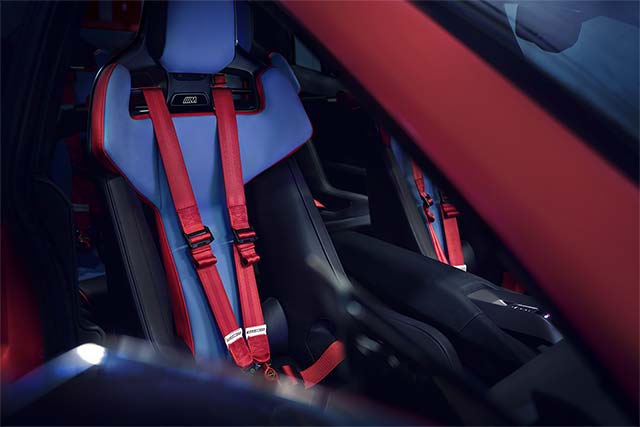
Four newly developed bucket seats provide support during high-performance driving and incorporate structural natural-fiber elements. The seats feature a two-tone Merino leather finish in Bathurst Blue and Berry Red, drawing inspiration from BMW M’s iconic color palette.
Red five-point harnesses reinforce the motorsport character, while black nubuck leather—used for the first time in a BMW M model—covers the steering wheel, door panels, and roll bar.
The floating dashboard is finished in black knit material with illuminated hexagonal graphics unique to BMW M. Additional red accents on the steering wheel controls, gear selector, and digital displays further emphasize the performance-focused nature of the cockpit.
Four Electric Motors and Advanced Performance Control
Beneath the striking design lies one of the most significant aspects of the concept: BMW’s next-generation electric performance technology.
The BMW M Concept Neue Klasse features the new BMW M eDrive system, developed specifically for future all-electric BMW M vehicles. The system combines four electric motors with BMW M Dynamic Performance Control, an advanced software platform integrated into BMW’s high-performance “Heart of Joy” computing architecture.
This setup enables precise wheel-by-wheel control of both power delivery and braking, allowing for exceptional traction, sharper responses, and improved stability. BMW says the technology unlocks new levels of driving dynamics while enhancing safety and efficiency.
The system also supports high levels of regenerative braking and optimizes vehicle behavior at the limit, both on the road and on the racetrack.
800-Volt Architecture and Long-Range Capability
The concept is built on BMW’s sixth-generation electric vehicle technology, featuring an 800-volt electrical architecture and a high-voltage battery with more than 100 kWh of energy capacity.
BMW has developed an M-specific version of its next-generation cylindrical battery cells to deliver greater performance during acceleration and charging. The battery pack is structurally integrated into the vehicle and connected directly to both the front and rear axles, contributing to chassis rigidity and enhanced handling characteristics.
The combination of high-capacity energy storage, fast-charging capability, and advanced electric drivetrain technology is expected to provide the foundation for future high-performance BMW M EVs capable of delivering both long range and track-ready performance.
The Future of BMW M Starts Here
The BMW M Concept Neue Klasse represents more than just a design study. It serves as a preview of the technologies, styling cues, and engineering philosophy that will define BMW M’s electric future.
By combining four-motor performance, advanced software control, lightweight materials, and unmistakable motorsport-inspired design, BMW is signaling that electrification will not come at the expense of the driving experience that has defined M vehicles for decades.
As BMW transitions into the Neue Klasse era, the M Concept Neue Klasse provides a compelling glimpse of how the brand plans to maintain its performance credentials while embracing an all-electric future.


