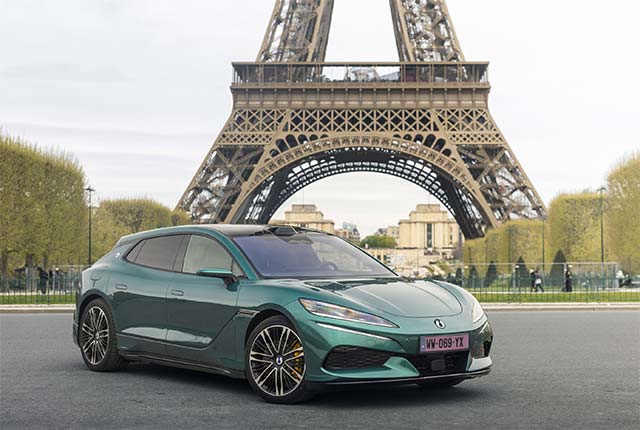
Chinese automotive giant BYD has set an ambitious new target: becoming the world’s largest automaker within the next five years.
Already the world’s biggest electric vehicle manufacturer by sales, BYD is now looking far beyond its dominance in China as it ramps up international expansion, invests heavily in next-generation charging technology, and accelerates overseas production.
Speaking at the company’s annual shareholder meeting in Shenzhen, BYD Chairman and CEO Wang Chuanfu outlined the company’s long-term vision.
“BYD will truly become the number one automaker globally in terms of scale in five years,” Wang told shareholders.
Aiming for Toyota’s Crown
The challenge ahead is significant. While BYD delivered approximately 4.8 million vehicles in 2025, industry leader Toyota sold around 11.3 million vehicles during the same period.
Despite the gap, BYD’s rapid growth trajectory suggests the company is serious about closing it. After ending production of conventional internal-combustion-only vehicles in 2022, BYD focused entirely on battery-electric vehicles (EVs) and plug-in hybrid electric vehicles (PHEVs). That strategy has fueled remarkable growth, helping the company become the sixth-largest automaker globally by sales volume.
BYD also surpassed Ford for the first time and overtook Tesla as the world’s largest EV manufacturer, strengthening its position as one of the automotive industry’s fastest-growing brands.
Overseas Growth Becomes the Key Driver
With competition intensifying in China’s domestic market, BYD is increasingly looking overseas for growth.
The company’s international sales continue to surge. In May alone, BYD sold more than 160,000 vehicles outside China, representing an 80% increase compared with the same month a year earlier.
BYD exported approximately 1.05 million vehicles in 2025 and is targeting 1.5 million overseas deliveries in 2026. The automaker has steadily gained market share in regions traditionally dominated by Toyota, Volkswagen, and other established global brands.
Europe, Southeast Asia, Australia, Brazil, Mexico, and the United Kingdom have become key battlegrounds for the company’s expansion strategy. In several markets, including Australia, Brazil, and the UK, BYD has already emerged as one of the leading EV brands, outperforming rivals such as Tesla and Kia in sales.
The company is also eyeing further opportunities in North America, with strong growth in Mexico and increasing interest in Chinese EVs across Canada.
Flash Charging Technology Could Be a Major Advantage
A central part of BYD’s global growth strategy revolves around its latest battery and charging technologies.
Earlier this year, the company unveiled its next-generation Blade Battery 2.0 and a new Flash Charging platform capable of dramatically reducing charging times.
BYD’s Flash Charging stations can deliver up to 1,500 kW of charging power, allowing compatible vehicles to recharge from 10% to 70% in approximately five minutes. A charge from 10% to 97% can be completed in around nine minutes.
The technology has generated strong consumer interest. According to Wang, demand for some newly launched models equipped with the latest battery and charging systems has exceeded expectations, with orders surpassing 100,000 units for certain vehicles.
Massive European Charging Expansion
To support its European ambitions, BYD recently announced plans to invest nearly £1.8 billion in charging infrastructure across the continent.
The company has already opened its first Flash Charging stations in Europe and the UK, marking the beginning of a large-scale rollout. BYD plans to deploy 300 Flash Chargers across the UK and approximately 3,000 throughout Europe by the end of 2026.
The investment is designed to address one of the biggest barriers to EV adoption—charging convenience—while giving BYD a competitive edge against both traditional automakers and EV-focused rivals.
Building Cars in Europe
Beyond charging infrastructure, BYD is accelerating its manufacturing footprint in Europe.
The company’s new production facility in Hungary is expected to begin vehicle assembly during the fourth quarter of this year. Producing vehicles locally will help BYD avoid European tariffs on Chinese-made electric vehicles while reducing logistics costs and improving delivery times.
According to BYD Executive Vice President Stella Li, Hungary is currently the company’s top priority in Europe. The automaker is also evaluating additional manufacturing opportunities and plans to establish a second production facility somewhere in Europe.
BYD has temporarily paused work on a planned plant in Turkey while focusing resources on expanding its EU-based manufacturing operations.
Can BYD Really Become Number One?
Reaching the top spot in global automotive sales will require BYD to more than double its current volume and surpass industry giants such as Toyota and Volkswagen.
However, the company has several powerful advantages: industry-leading battery technology, ultra-fast charging capabilities, aggressive international expansion, growing manufacturing capacity outside China, and strong momentum in key global EV markets.
While overtaking Toyota remains a daunting challenge, BYD’s growth over the past few years has consistently exceeded expectations. If demand for its electric and plug-in hybrid vehicles continues to rise and its overseas strategy succeeds, the company could become one of the most disruptive forces the global automotive industry has ever seen.
For now, BYD’s message is clear: it is no longer competing simply to lead the EV market—it is competing to become the world’s largest automaker.
[source: Reuters]