


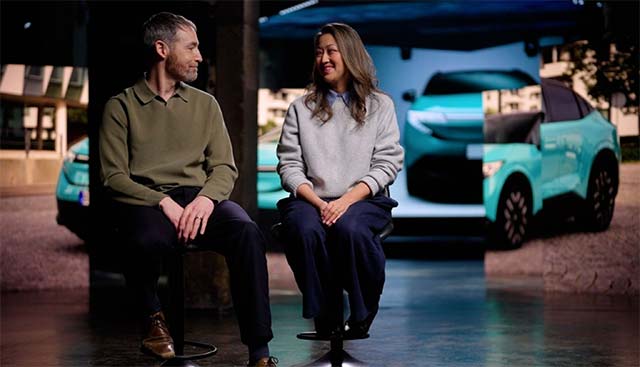
For more than a decade, electric vehicle pioneers Chris and Julie Ramsey have been proving that EVs are capable of far more than daily commuting. From the deserts of Mongolia to the freezing conditions of polar expeditions, the Scottish couple has spent 13 years pushing electric mobility to its limits — and documenting just how quickly the technology has evolved.
Their journey closely mirrors the transformation of the Nissan LEAF, one of the world’s earliest mass-market electric vehicles. What began as an experimental leap into electric driving has now become a showcase for how modern EVs can handle both extreme adventures and everyday travel with ease.
When Chris Ramsey first began driving a first-generation Nissan LEAF in 2013, the EV landscape looked very different. The original LEAF offered around 105 km (65 miles) of range, public charging networks were still limited, and many drivers questioned whether electric cars could realistically replace combustion-powered vehicles.
Today, the latest Nissan LEAF delivers up to 386 miles (622 km) of range, while integrated route planning with Google built-in helps simplify long-distance journeys. The difference highlights just how rapidly EV technology has advanced in little more than a decade.
According to Chris Ramsey, the transition from curiosity to confidence happened naturally over time.
“What began as curiosity — ‘how far can we go?’ — quickly turned into a new normal,” Ramsey explained. “The longer we drove electric, the more we learned about smoother driving, smarter charging and using energy more efficiently.”
That experience reflects a broader shift taking place across the automotive industry. Early concerns about battery range, charging availability, and practicality are steadily being replaced by growing consumer confidence as EV infrastructure expands worldwide.
The Ramseys say three major changes have transformed the EV ownership experience over the years:
– Significantly improved driving range
– Rapid growth of charging infrastructure
– Smarter in-car technology for route planning and energy management
A journey that once required careful preparation can now be completed far more easily. For example, the roughly 550-mile (885 km) drive from Aberdeen to London — once considered difficult in an early EV — can now be achieved with a single fast-charging stop in the latest LEAF.
Beyond everyday driving, the Ramseys have repeatedly demonstrated the durability and capability of electric vehicles through some of the world’s toughest expeditions.
In 2015, they completed the 1,652-mile journey from John O’Groats to Land’s End and back using only public charging stations in a Nissan LEAF. Two years later, they became the first team to complete the 8,000-mile Mongol Rally in an electric vehicle.
Their most ambitious challenge came in 2023, when they completed the Pole-to-Pole expedition — the first drive from the Magnetic North Pole to the South Pole completed by any vehicle.
These adventures helped showcase that modern EVs are not limited by geography or climate. Instead, they have become increasingly capable transportation solutions suited for both daily commuting and demanding global travel.
“We’ve put our life in the hands of electric vehicles,” said Ramsey. “And they’ve never let us down.”
As automakers continue improving battery technology, charging speed, and software integration, the Nissan LEAF remains a symbol of how far electric mobility has progressed since the early days of mass-market EV adoption.


