
For years, plug-in hybrids have faced the same criticism: owners simply don’t plug them in.
That argument has been repeated by EV advocates, industry executives, and critics who see plug-in hybrids (PHEVs) as an awkward middle ground between traditional hybrids and fully electric vehicles. The logic sounded simple enough — if drivers rarely charge their PHEVs, then they’re just hauling around a heavy battery pack without gaining the fuel-saving benefits.
But new research from Toyota Research Institute North America (TRINA) suggests that assumption may be outdated.
A large-scale study analyzing more than 6,000 Toyota and Lexus plug-in hybrids across the United States and Canada found that most owners are, in fact, charging their vehicles regularly. The findings challenge one of the most persistent myths surrounding PHEVs and highlight why these vehicles continue to appeal to drivers who want electric driving without fully committing to an EV lifestyle.
Most PHEV Owners Actually Plug In
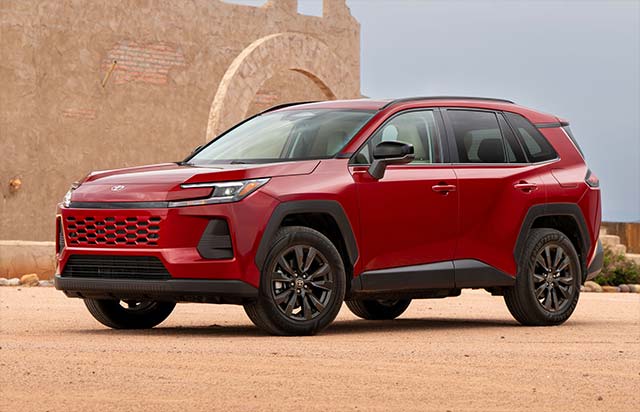
The peer-reviewed study, conducted by TRINA researchers Karim Hamza and Ken Laberteaux and published through SAE International, focused on the Toyota RAV4 PHEV (previously called the RAV4 Prime) and the Lexus NX 450h+.
According to the research, Toyota PHEV owners plugged in their vehicles on roughly seven out of every 10 driving days. Lexus owners charged even more frequently, averaging between eight and nine charging days out of every 10.
Only a small minority rarely used the charging port at all — around 9% of Toyota owners and just 4% of Lexus drivers.
Those findings directly contradict the widespread belief that PHEV drivers treat their vehicles like standard hybrids.
The study also shows how modern plug-in hybrids have evolved. Earlier models, such as the original plug-in Prius, offered limited electric-only capability and often relied on the gasoline engine even during short trips. Today’s PHEVs deliver substantially more usable electric range and stronger electric performance.
The current Toyota RAV4 PHEV offers an EPA-estimated 42 miles of electric range, while the Lexus NX 450h+ delivers around 37 miles. Newer 2026 Toyota and Lexus plug-in hybrid models stretch that even further, with electric-only ranges ranging from 33 miles in the Lexus TX 550h+ to up to 54 miles in the 2026 Toyota RAV4 PHEV SE.
For many commuters, that’s enough to complete daily driving entirely on electricity while still keeping a gasoline engine available for long-distance trips.
Why Plug-In Hybrids Still Struggle in the U.S.
Despite their flexibility, plug-in hybrids remain a niche segment in North America.
In the United States, PHEVs account for less than five percent of new vehicle sales. That’s surprisingly low considering they combine electric driving with the convenience of gasoline backup power.
So why aren’t more buyers choosing them?
The answer comes down to a mix of cost, infrastructure, and consumer perception.
PHEVs are typically more expensive than conventional hybrids because they require larger battery packs and more complex powertrains. While owners can save money on fuel over time, the higher upfront price often discourages shoppers.
Charging access also remains a challenge. Unlike regular hybrids, PHEVs deliver their biggest benefits only when plugged in consistently. Drivers without convenient home charging — especially apartment residents or people living in multi-unit housing — may struggle to maximize efficiency.
Reliability concerns haven’t helped either. Some industry studies have ranked plug-in hybrids below traditional hybrids in initial quality and long-term dependability, largely because PHEVs combine the complexity of both gasoline and electric systems.
These factors have created a strange market dynamic where consumers interested in electrification often skip directly to fully electric vehicles, while others stick with simpler hybrid models.
The Case for Plug-In Hybrids Is Still Strong
Even with those challenges, plug-in hybrids continue to offer a compelling middle ground for many drivers.
For buyers who aren’t ready to rely entirely on public charging infrastructure, a PHEV can eliminate range anxiety while still drastically reducing gasoline use. Most daily commuting can be handled on electric power alone, especially as modern PHEVs push beyond 40 miles of electric range.
They also offer some advantages over regular hybrids. Electric motors provide stronger low-speed acceleration and smoother city driving, while home charging can dramatically reduce fuel costs in regions with affordable electricity prices.
TRINA researchers noted that the average U.S. residential electricity price sits around 18 cents per kilowatt-hour, making electric driving significantly cheaper than gasoline for typical daily commutes. However, they also acknowledged regional exceptions where unusually high electricity rates or low gas prices can make charging less financially attractive.
That helps explain why a small percentage of owners rarely plug in.
Still, the broader conclusion is clear: when drivers own a plug-in hybrid with meaningful electric range and have access to affordable charging, most of them actively use the electric capability.
A Practical Bridge Between Gasoline and EVs
The automotive industry is currently in a transitional phase. Full EV adoption continues to grow globally, but demand has cooled in some markets as consumers weigh charging infrastructure, affordability, and long-distance usability.
Plug-in hybrids sit directly in the middle of that debate.
For some buyers, they represent the perfect compromise — offering electric driving for everyday use and gasoline convenience for road trips. Others still see them as an unnecessary halfway solution.
But Toyota’s latest findings suggest the reality is far more practical than critics often claim.
Far from ignoring the charging cable, most plug-in hybrid owners appear to be doing exactly what these vehicles were designed for: driving electric whenever possible and using gasoline only when necessary.
The “lazy PHEV owner” narrative may finally be running out of charge.


