BYD has reached a major milestone in its push to transform EV charging in China, with its Flash Charging network now exceeding 10,000 stations across 325 cities.
The milestone was marked on August 28 at BYD’s new Flash Charging flagship station in Shenzhen’s Longhua district. The Chinese EV giant says the network has expanded at an average rate of about 55 stations per day since its latest Flash Charging technology was unveiled in March.
However, BYD still has a huge deployment challenge ahead. The company is targeting 20,000 Flash Charging stations in China by the end of 2026, meaning another 10,000 locations must be added before December 31.
BYD’s Flash Charging Network Has Doubled in Less Than Five Months
BYD activated its 5,000th Flash Charging station on April 1. Reaching 10,000 stations by August 28 means the network has doubled in less than five months.
The network now stretches well beyond China’s largest cities. BYD says its charging stations cover 325 mainland Chinese cities, with locations ranging from Hulunbuir in Inner Mongolia to Sanya in Hainan, Shuangyashan in Heilongjiang and Kashgar in Xinjiang.
The company has also highlighted Flash Charging locations in Turpan and near Mount Everest, demonstrating the scale of its expansion across the country.
BYD describes the network as the largest self-built charging network operated by a Chinese automaker in terms of both scale and geographic coverage.
The company has partnered with major businesses and charging operators, including Sinopec, PetroChina, CNOOC, TELD, JD.com, Alipay, AutoNavi (Amap) and Ucar, to accelerate deployment.
More Than 1.83 Million Drivers Have Registered
BYD says its Flash Charging network has already attracted more than 1.83 million registered users.
Interestingly, almost one-third of those users drive vehicles from brands other than BYD. That suggests the network could become an important part of China’s broader public EV charging infrastructure rather than remaining primarily a BYD-only ecosystem.
The network has delivered a cumulative 210 million kWh of electricity in less than six months.
BYD has not disclosed the total number of charging sessions or the average amount of electricity delivered during each session.
The company says vehicles from other manufacturers can use the Flash Charging network, although charging speeds vary significantly depending on the vehicle’s battery, charging system and maximum DC charging capability.
That distinction is important because a charging station’s maximum output does not necessarily mean every EV connected to it can receive that level of power.
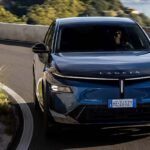
For example, the Lynk & Co 10 has previously been reported to reach around 430 kW at a BYD Flash Charging station, despite BYD’s newest chargers being capable of much higher output.
BYD’s 1,500 kW Chargers Promise Extremely Fast Charging
BYD unveiled its latest Flash Charging technology in March alongside its second-generation Blade Battery.
The new charging system can deliver up to 1,500 kW per connector, with each charging unit equipped with two connectors.
When combined with the second-generation Blade Battery, BYD claims an EV can charge from 10% to 97% in just nine minutes.
The technology is designed to dramatically reduce charging times and make high-power DC charging more comparable with the time required to refuel a gasoline-powered vehicle.
Actual charging performance, however, depends on the vehicle and battery pack. A 1,500 kW charging station cannot force an EV to accept more power than its onboard charging system and battery are designed to handle.
Can BYD Build Another 10,000 Stations in Four Months?
Reaching 10,000 stations represents exactly half of BYD’s 2026 target.
The company plans to have 20,000 Flash Charging stations in China by the end of the year, including 18,000 urban locations and another 2,000 along highways.
That leaves roughly 125 days between the August 28 milestone and the end of 2026, requiring BYD and its partners to deploy approximately 80 stations per day to reach the target.
That is significantly faster than the roughly 55-station daily average achieved since the March announcement.
The 55 stations-per-day figure reflects BYD’s average deployment pace so far and should not be interpreted as a forecast for the remainder of the year.
Partnerships will be critical to closing the gap. BYD says 18,000 of its planned 20,000 Chinese stations will be developed in cooperation with charging network operators, while the remaining 2,000 are planned for highway locations.
BYD Is Taking Flash Charging Overseas
The charging strategy is not limited to China.
BYD plans to deploy 6,000 Flash Charging stations outside China, including 3,000 in Europe. The company has already started building its first Flash Charging stations in the UK and plans to have around 300 locations there by the end of 2026.
European installations will use the CCS2 charging standard, while BYD’s Chinese Flash Charging network uses the GB/T standard.
The international expansion could give BYD another competitive advantage as automakers increasingly look beyond vehicle sales and invest in charging infrastructure.
The company is also expanding its broader EV business in Europe. Denza is targeting more than 30 European countries and more than 150 retail outlets by the end of 2026.
BYD’s Charging Technology Could Spread to Other Brands
BYD’s Flash Charging technology may eventually reach vehicles outside its own lineup.
Hongqi is expected to become the first non-BYD brand to adopt BYD’s second-generation Blade Battery and Flash Charging technology. FAW-FinDreams has nominated the technology for Hongqi’s next-generation pure-electric platform, although specific production models and launch timing have not yet been announced.
That could be an important development for BYD’s charging ecosystem. If more automakers adopt compatible battery and charging technology, the company’s ultra-fast charging infrastructure could gain much broader relevance.
For now, however, the immediate challenge is scale.
BYD has gone from 5,000 to 10,000 Flash Charging stations in less than five months. Doubling the network again before the end of 2026 will require an even faster deployment pace.
If BYD succeeds, its 20,000-station target would create one of the world’s largest ultra-fast EV charging networks and could further raise expectations for charging speeds across the electric vehicle industry.
[source: CNEVPOST]