
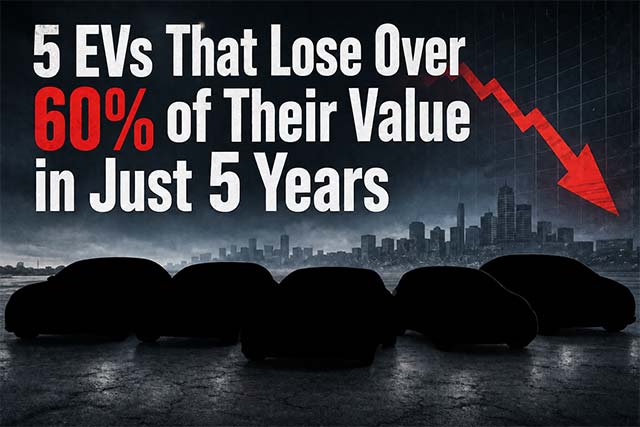
Some EVs lose more than 60% of their value in just five years. The Audi e-tron GT, Jaguar I-Pace, Tesla Model S, Nissan LEAF, and Tesla Model X all land in this club. Luxury pricing, aggressive price cuts, and fast-moving EV tech are the main culprits. Read on to see the numbers behind each model, and which EVs hold their value best if resale matters to you.
Buying an EV in 2026 means accepting that it will lose value faster than almost any gas car on the road. The average EV loses about 57% to 59% of its value after five years, according to iSeeCars’ 2026 depreciation study, well above the roughly 41.8% average across all vehicle types. Some models blow right past that already-steep number.
Part of the problem is timing. The federal EV tax credit expired on September 30, 2025, and that shift has reshaped the entire used-EV market. Buyers who once leaned on a $7,500 credit for a new EV are now shopping used instead, which pushes new-car values down even faster.
Below are five EVs that lose more than 60% of their value in five years, based on data from iSeeCars, CarEdge, and Recharged. We’ll break down why each one depreciates so hard, and what it means whether you’re buying new, buying used, or trying to sell.
Why Do Some EVs Lose Value Faster Than Others?
A few forces combine to crush EV resale values more than gas cars. High MSRPs on luxury EVs shrink the pool of used buyers who can afford them. Frequent price cuts on new EVs drag down the value of every used example already on the road. And EV battery and range technology improves so quickly that a five-year-old EV can feel like it’s missing a generation of upgrades.
Add in the loss of federal incentives on the used side, and you get a market where EVs depreciate noticeably faster than comparable gas cars. Recharged’s depreciation data puts the average EV five-year loss at around 59%, compared to roughly 40% to 50% for gas vehicles. Here’s how that plays out model by model.

Audi e-tron GT: 60% Five-Year Depreciation
The Audi e-tron GT depreciates 60% after five years, dropping from an average sticker price of $107,995 to a resale value of just $43,187, according to CarEdge’s depreciation calculator.
The e-tron GT shares its platform with the Porsche Taycan, but it doesn’t hold value nearly as well. Part of the issue is the broader luxury EV sedan segment, which has struggled against SUVs and crossovers for buyer attention. If you want a premium electric vehicle without eating that kind of loss, it’s worth cross-shopping newer premium electric SUVs that are still early in their depreciation curve.

Is the Jaguar I-Pace the Worst-Depreciating EV on the Market?
Yes. The Jaguar I-Pace loses about 70% to 72% of its value after five years, the steepest drop of any EV tracked by iSeeCars, CarEdge, or Recharged. CarEdge puts the number at 70.7%, while Recharged estimates it even higher at 72.2%.
The I-Pace was Jaguar’s first mass-market EV, and it launched with a price tag north of $75,000. That already put it in a tough resale spot. Things got worse from there. Jaguar has been through a rocky rebrand and a long production pause, which leaves buyers wondering about long-term support. The brand also dealt with a recent battery overheating recall on nearly 2,300 I-Pace units, which doesn’t help buyer confidence in older examples.
Tesla Model S: A Flagship Losing Value Fast
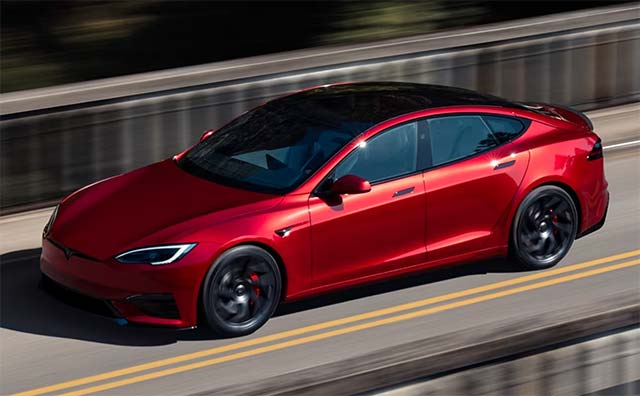
A five-year-old Tesla Model S loses about 62% to 69% of its value, depending on the source. CarEdge estimates a 69% drop, while iSeeCars puts the figure closer to 62%.
The Model S has always been a mid-size luxury sedan with a six-figure starting price, and that puts it in the same tough resale category as the e-tron GT. Tesla’s habit of cutting prices on new inventory doesn’t help either. Every price cut on a new Model S pulls down the value of every used one already sitting in driveways. On top of that, Tesla is winding down both the Model S and Model X, which adds uncertainty about long-term parts and support for buyers eyeing a used one.

Why Does the Budget-Friendly Nissan LEAF Still Depreciate So Much?
Even though the Nissan LEAF starts under $30,000, it loses a huge share of that value fast. iSeeCars puts the five-year loss at 62.9%, CarEdge estimates 66%, and Recharged lands at 64%.
In dollar terms, the LEAF’s depreciation looks small next to a luxury EV. Losing 66% of a $30,000 car costs a lot less than losing 60% of a $108,000 one. Still, the percentage is steep, and it comes down to older battery and charging tech, modest range compared to newer rivals, and Nissan’s habit of cutting prices on the new LEAF. The good news: the redesigned 2026 LEAF fixes many of these issues with a bigger battery and faster charging, which our Bolt vs. Leaf comparison covers in more detail. Whether that improves resale on the new generation remains to be seen.
Tesla Model X: Depreciation Hits SUVs Too
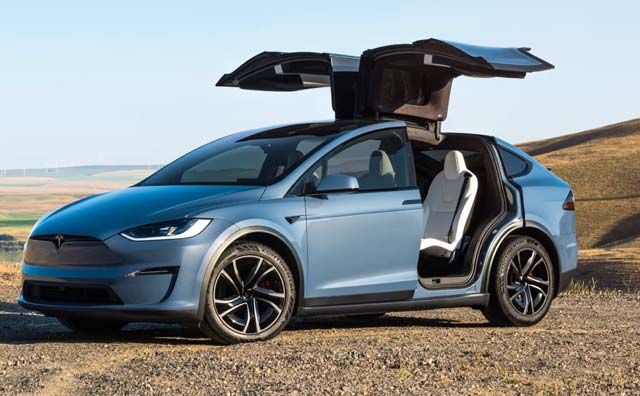
The Tesla Model X loses about 57% to 67% of its value over five years. iSeeCars estimates 61.1%, CarEdge estimates 67%, and Recharged comes in lower at 57%.
That’s a wide spread, and it shows just how much depreciation estimates can shift depending on mileage, condition, and where a car is sold. Even at the low end, though, the Model X loses more value than most gas SUVs in its price range.
The Model X has been on sale for years now, so it’s aging against newer three-row electric SUVs with better range and tech. Reliability concerns have also dogged the Model X, which doesn’t help buyer confidence in an older example. Combined with Tesla’s decision to end production, that uncertainty is showing up in resale values.
Which EVs Hold Their Value Best If You Want to Avoid This?
Tesla’s mainstream models tell a very different story than its flagships. The Model 3 and Model Y hold value far better than the Model S and Model X, and the Porsche Taycan is one of the few luxury EVs that doesn’t crater in resale. According to The Charge Port’s depreciation tracker, the Model 3 held around 66% of its value after two years and the Model Y held around 64%, thanks in part to Supercharger access and steady software updates.
If depreciation worries you, mainstream EVs from high-volume automakers tend to hold up better than low-volume luxury models. It’s also worth remembering that used EV demand is climbing, which means today’s steep depreciation could turn into tomorrow’s used-car bargain for the next buyer in line.
The Bottom Line on EV Depreciation
The Audi e-tron GT, Jaguar I-Pace, Tesla Model S, Nissan LEAF, and Tesla Model X all lose more than 60% of their value within five years, according to data from iSeeCars, CarEdge, and Recharged. Luxury pricing, frequent price cuts, and fast-moving EV technology are the biggest reasons why.
If you’re buying new, go in with your eyes open about how much that sticker price will shrink. If you’re buying used, steep depreciation on these five models can work in your favor, since someone else already absorbed the steepest part of the drop. Before you decide, check out our guide to the best affordable electric cars for 2026 to see which EVs deliver the most value for your money today.


