
Nissan and Chery International UK have taken a significant step toward a potential manufacturing partnership that could reshape the UK automotive landscape and strengthen the future of Nissan’s Sunderland facility.
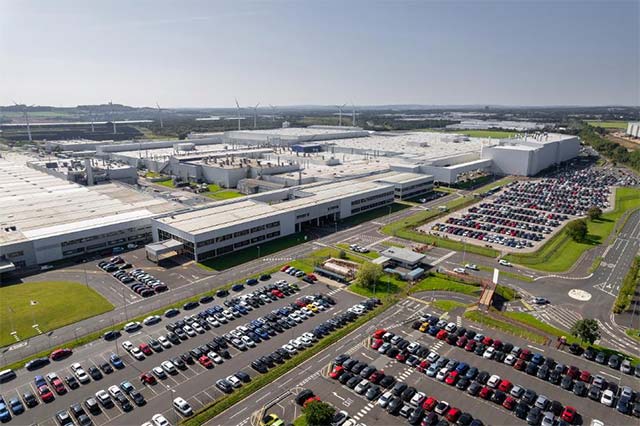
The two companies have signed a non-binding Memorandum of Understanding (MoU) to study the possibility of Nissan producing Chery passenger vehicles at its Sunderland plant in northeast England. If the project moves forward, production could begin on the facility’s Line One during Nissan’s 2027 financial year.
The proposed arrangement would mark a major milestone for the UK automotive sector, potentially paving the way for the first large-scale production of Chinese-branded passenger vehicles in Britain. Chery has rapidly expanded its presence in the UK market through its Chery, Omoda, and Jaecoo brands, with growing consumer demand helping the company gain momentum.
Under the terms currently being discussed, Nissan would retain full ownership of the Sunderland facility, while all plant employees would remain Nissan staff. The agreement is currently exploratory, and both companies emphasized that discussions are ongoing.
Supporting Sunderland’s Long-Term Future
The move follows Nissan’s decision announced in May to consolidate manufacturing operations onto Sunderland’s production Line Two. The restructuring was designed to improve factory utilization and create opportunities for additional production programs.
Sunderland remains the UK’s largest vehicle manufacturing plant and is widely regarded as one of Europe’s most efficient automotive facilities. The factory currently builds popular models including the Nissan Qashqai, Nissan Juke, and the Nissan LEAF.
However, like many automakers operating in Europe, Nissan has faced challenges from slower-than-expected market recovery and increasing global competition. The company is also undertaking a broader restructuring effort that includes operational changes across several markets.
The potential Chery partnership could help increase production volumes at Sunderland, which currently operates well below its annual capacity of approximately 600,000 vehicles. In 2025, the plant produced around 273,000 vehicles, highlighting the opportunity for additional manufacturing programs to utilize available capacity.
Industry observers note that securing new production contracts could provide greater long-term stability for the facility and its workforce of roughly 6,000 employees.
Chery’s Rapid Growth in the UK
Chery has emerged as one of the fastest-growing automotive groups in the UK. Its Omoda and Jaecoo brands have gained traction in recent months, particularly in the electrified vehicle segment.
The Jaecoo 7 plug-in hybrid SUV has proven especially successful, becoming the UK’s best-selling model in March. The company’s expanding lineup and growing dealer network have helped establish a stronger foothold in one of Europe’s most competitive automotive markets.
For Chery, local production in the UK could offer strategic advantages, including shorter supply chains, faster delivery times, and enhanced market positioning. For Nissan, the arrangement would provide an opportunity to maximize utilization of existing manufacturing assets while reinforcing Sunderland’s role as a key production hub.
Discussions Continue
While the MoU does not guarantee a final agreement, it signals a willingness from both automakers to explore a mutually beneficial manufacturing partnership.
Massimiliano Messina, Chairperson of Nissan AMIEO, described the agreement as “an important step forward” for Nissan’s operations and said the company looks forward to working with Chery International UK to determine the best outcome for both parties.
Further details have not been disclosed, and both companies say discussions remain ongoing.
If finalized, the agreement could become one of the most notable collaborations between a Japanese and Chinese automaker in Europe, while securing new production opportunities for one of Britain’s most important automotive plants.


