

Waymo is preparing to launch its next-generation Ojai robotaxi for public riders, marking a major step forward in the expansion of autonomous ride-hailing services in the United States.
The new electric van will initially roll out in San Francisco, Los Angeles, and Phoenix through a free early-access program before broader public availability later this year.
The Ojai represents a significant evolution for Waymo’s self-driving fleet. While the company’s current Jaguar I-Pace robotaxis will remain in service, the new purpose-built vehicle introduces a more spacious cabin, enhanced accessibility, and a new generation of autonomous driving technology designed to improve performance in difficult weather conditions.
A Purpose-Built Robotaxi Experience
Unlike retrofitted passenger vehicles, the Waymo Ojai was developed specifically for autonomous ride-hailing. The vehicle is based on the Zeekr RT platform, itself derived from the Zeekr Mix electric van developed by Geely-owned EV brand Zeekr.
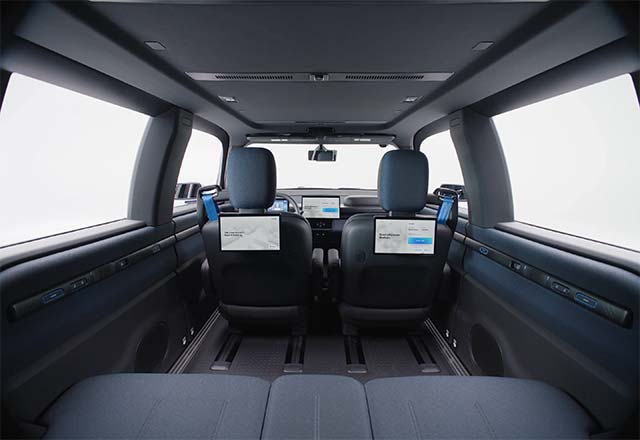
Waymo says the Ojai was designed to feel more like a “living room on wheels” than a traditional car. Elevator-style sliding doors open to reveal a flat-floor interior with a low step-in height, making entry and exit easier for riders of all ages and mobility levels.
Large windows create an airy atmosphere inside the cabin, while three LED displays allow passengers to control climate settings, entertainment, and ride preferences. The roomy interior is expected to provide a more comfortable experience compared to the existing Jaguar I-Pace fleet.
Accessibility was also a central focus during development. The Ojai includes embedded braille, screen-reader compatibility, and integrated support handles to improve usability for passengers with disabilities.
Sixth-Generation Waymo Driver
The Ojai will be the first vehicle equipped with Waymo’s sixth-generation autonomous driving system, known as the Waymo Driver. The updated platform introduces major hardware and software improvements while reducing overall sensor complexity and costs.
The system now uses 13 cameras, four lidar units, and six radar sensors, significantly fewer than previous generations. Despite the reduction in hardware, Waymo claims the new setup delivers improved perception and reliability.
A key upgrade is the introduction of new 17-megapixel cameras with improved dynamic range and low-light sensitivity. The company says the cameras generate sharper imagery and maintain thermal stability under demanding driving conditions.
The lidar system creates a detailed 3D map of the vehicle’s surroundings and provides redundancy for camera-based perception. Additional features include integrated sensor-cleaning systems and the “EAR” (External Audio Receiver) system, which can detect emergency vehicles and railway crossings through audio recognition.
Waymo says the sixth-generation system is designed to better handle harsh weather, including rain and snow, opening the door to expansion into colder U.S. markets for the first time.
Expansion Across More U.S. Cities
Waymo currently operates approximately 3,000 autonomous vehicles and reports more than half a million paid rides per week across multiple U.S. cities. The company has already completed more than 20 million fully autonomous trips.
The Ojai launch is part of Waymo’s broader national expansion strategy. Following the initial rollout in California and Arizona, the company plans to introduce the vehicle in Denver, Las Vegas, and San Diego over the coming months.
The company’s growth comes as competition intensifies in the robotaxi sector. Rivals including Zoox, Tesla, and Uber-backed autonomous programs are all seeking to expand their presence in the autonomous ride-hailing market.
Built in China, Completed in America
The Waymo Ojai also highlights an unusual manufacturing strategy designed to comply with U.S. regulations surrounding Chinese-made connected vehicles.
Zeekr manufactures the base vehicle structure — including the chassis, body, battery pack, and electric motors — at its facility in Ningbo, China. These unfinished “gliders” are then shipped to Waymo’s factory in Mesa, Arizona.
At the Arizona facility, Waymo and manufacturing partner Magna install the autonomous driving hardware, sensors, onboard computing systems, and connectivity technology. By adding the connected systems in the United States, Waymo avoids restrictions that currently affect Chinese-origin connected vehicle technology.
The strategy allows Waymo to benefit from Zeekr’s advanced EV manufacturing capabilities while remaining compliant with U.S. regulations.
More Robotaxis on the Way
The Ojai is not expected to be Waymo’s only next-generation autonomous vehicle. The company is also preparing a robotaxi version of the Hyundai Ioniq 5, which will eventually join the fleet.
For now, however, the Ojai appears set to become the centerpiece of Waymo’s expansion plans. With a purpose-built design, improved passenger comfort, and upgraded autonomous technology, the electric van could help accelerate the adoption of robotaxi services across the United States.
[source: Waymo]


