
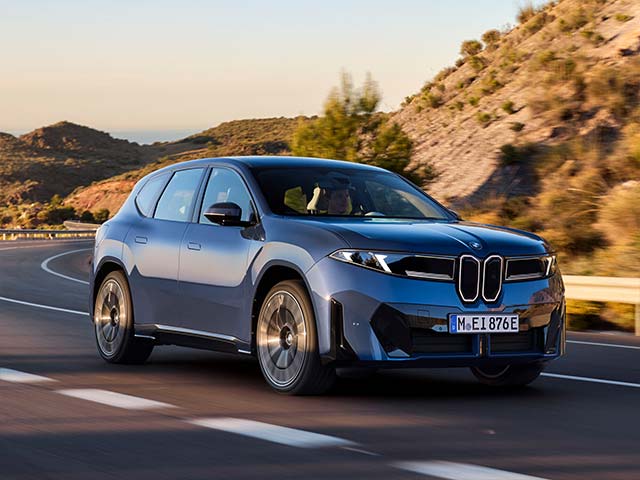
BMW Group has started 2026 with strong momentum in Europe, driven by surging demand for its next-generation electric vehicles. The automaker says incoming orders for battery electric vehicles (BEVs) in Europe rose by around 40% in the first quarter compared to the same period last year, led by exceptional interest in the all-new BMW iX3.
The strong early performance highlights growing customer confidence in BMW’s Neue Klasse platform, which is set to play a central role in the brand’s future EV strategy.
BMW iX3 Demand Exceeds Expectations
BMW says customer response to the new BMW iX3 has surpassed internal forecasts. Since order books opened in Europe, the company has received more than 50,000 orders for the electric SUV.
That level of demand is already reshaping buyer preferences within the BMW X3 lineup. According to BMW, more than half of all newly ordered X3 models are now fully electric.
The BMW iX3 is the first production model based on BMW’s Neue Klasse architecture, which promises major improvements in efficiency, software, charging, and digital features. The first customer deliveries in Europe began in March, marking the start of a key rollout phase for the company.
BMW also says feedback has been highly positive for the recently revealed second Neue Klasse model, the upcoming BMW i3 sedan.
BMW EV Orders Rise Despite Market Headwinds
The 40% increase in European BEV orders comes at a time when the broader automotive market remains mixed. BMW noted that overall orders in Europe were also up across all drivetrain types, including combustion models.
In the first quarter of 2026, BMW Group delivered 565,748 vehicles globally across its BMW, MINI, and Rolls-Royce brands. That total was down 3.5% year-over-year, reflecting ongoing market challenges and regional policy shifts.
Still, the company pointed to resilient demand in several key areas:
– Germany deliveries rose 10.7% to 68,022 units.
– In China, BMW Group outperformed the broader market decline.
– MINI posted its fifth straight quarter of global sales growth.
BMW said the end of BEV purchase incentives in the U.S. affected the entire electric vehicle market, contributing to lower global EV deliveries. At the same time, demand for combustion-engine BMW models increased in that market.
Global BMW EV Deliveries Slip, But Europe Holds Strong
BMW Group delivered 87,458 fully electric vehicles worldwide in the first quarter, down 20.1% from a year earlier. However, Europe remained a bright spot, with BEV sales in the region already exceeding last year’s first-quarter level.
That suggests BMW’s EV strategy is gaining traction in one of its most important markets, especially as the Neue Klasse lineup begins to expand.
The company remains confident that its broad product portfolio — spanning fully electric, plug-in hybrid, and combustion models — will help it navigate ongoing uncertainty while supporting future growth.
Brand Performance in Q1 2026
BMW brand deliveries totaled 496,050 units in the first quarter, down 4.6% compared to a year ago.
BMW M, following a record 2025, delivered 47,544 vehicles, down 5.9%.
MINI was one of the standout performers, with global sales rising 5.9% to 68,427 units. In Europe, the brand also recorded strong growth in EV sales.
Rolls-Royce delivered 1,271 vehicles in Q1, down 8.0%, while BMW Motorrad sold 42,735 motorcycles and scooters, down 4.2%.
Neue Klasse Could Be BMW’s EV Turning Point
The early success of the BMW iX3 suggests BMW’s Neue Klasse transition is off to a promising start. With more models set to follow and customer interest already exceeding expectations, BMW appears well-positioned to strengthen its foothold in Europe’s increasingly competitive EV market.
If order trends continue, the iX3 could become one of BMW’s most important electric launches to date — and a major catalyst for the company’s next phase of growth.


