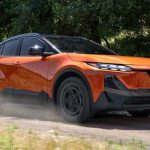
Volkswagen Group’s Electric Urban Car Family (EUCF) is taking center stage at the 2026 Paris Motor Show, bringing together four new electric vehicles designed to make EV ownership more accessible across Europe.
The lineup includes the CUPRA Raval, Volkswagen ID. Polo, Skoda Epiq and Volkswagen ID. Cross, with the group reporting nearly 150,000 orders before customer deliveries have begun.
Built around Volkswagen Group’s MEB+ platform, the four models represent a major step in the automaker’s strategy to expand its presence in Europe’s small electric car market. By sharing core technology while maintaining distinct designs and brand identities, the group aims to combine competitive pricing, production efficiency and everyday practicality.
The complete lineup also highlights how a project initially developed within Volkswagen Group’s Brand Group Core has evolved into a coordinated electric vehicle family targeting one of Europe’s most important market segments.
Four Electric Cars, One Shared Platform
The Electric Urban Car Family consists of two electric hatchbacks and two compact electric SUVs. Each model targets a different type of buyer while benefiting from shared engineering and technology.
The CUPRA Raval and Volkswagen ID. Polo are the hatchback members of the family, while the Skoda Epiq and Volkswagen ID. Cross take the form of compact electric SUVs.
All four vehicles use Volkswagen Group’s MEB+ platform and share key technical elements, including front-wheel-drive architecture, electric powertrain components and battery technology. According to the group, more than 80% of the components and technologies are common across the model family.
This approach is intended to reduce development and production costs while allowing each brand to deliver a different driving experience, design language and level of functionality.
For customers, the shared architecture could help bring modern EV technology into more affordable vehicle segments without making the four models feel identical.
Nearly 150,000 Orders Before Deliveries Begin
The Electric Urban Car Family has already attracted significant interest, with Volkswagen Group reporting almost 150,000 orders for the four models.
The early demand highlights the potential for smaller electric cars as European buyers look for alternatives to larger, more expensive electric SUVs. Competitive pricing, practical dimensions and modern electric technology are central to the group’s strategy for expanding EV adoption.
Thomas Schäfer, Volkswagen brand CEO and head of Brand Group Core, said the project demonstrates how cooperation between brands can deliver economies of scale while preserving the individual character of each vehicle.
The company sees the EUCF as more than a collection of new models. It is also intended to demonstrate how European manufacturers can develop and produce affordable electric vehicles at scale.
However, the reported order total does not necessarily translate directly into completed sales or deliveries. The figure reflects customer orders ahead of the start of deliveries.
Spain Becomes the Production Hub for All Four Models
Volkswagen Group is concentrating production of the Electric Urban Car Family in Spain, using two manufacturing sites to build the four vehicles.
The CUPRA Raval and Volkswagen ID. Polo will be produced in Martorell, while the Skoda Epiq and Volkswagen ID. Cross are assigned to the Pamplona plant.
This arrangement creates a connected manufacturing base on the Iberian Peninsula, allowing the group to coordinate production while taking advantage of common vehicle components and technology.
The strategy also supports Volkswagen Group’s broader efforts to strengthen European manufacturing and make electric vehicle production more cost-efficient.
Rather than developing four completely separate vehicle architectures, the group is using a common technical foundation and dividing production between facilities according to the models assigned to each plant.
Volkswagen Group Invests €10 Billion in Spain’s EV Industry
The Electric Urban Car Family forms part of a wider investment programme focused on Spain’s automotive and battery industries.
Volkswagen Group, SEAT & CUPRA, PowerCo and partners involved in the Future Fast Forward initiative are investing a combined €10 billion in Spain. The programme includes PowerCo’s battery cell factory in Sagunto and an additional €300 million investment by SEAT & CUPRA in a battery system assembly plant in Martorell.
SEAT & CUPRA has also invested €3 billion in its transition from combustion-engine vehicles to electric mobility.
These investments are designed to support more of the electric vehicle supply chain within Europe, from battery production and assembly to vehicle manufacturing. They also underline the importance of local production as automakers work to reduce costs and compete in the growing affordable EV segment.
A New Chapter for Europe’s Small Electric Cars
The four-model family has progressed significantly since Volkswagen Group presented the vehicles as heavily camouflaged prototypes and show cars at IAA Mobility 2025. Following their individual world premieres, the CUPRA Raval, Volkswagen ID. Polo, Skoda Epiq and Volkswagen ID. Cross are now appearing together at the Paris Motor Show for the first time.
The shared platform allows Volkswagen Group to spread development costs across multiple brands, while the Spanish production network supports a coordinated manufacturing strategy.
The nearly 150,000 reported orders suggest that the lineup has already generated considerable customer interest. The next major test will be how the four models perform once deliveries begin, particularly in a market where pricing, driving range, charging performance and everyday usability remain important factors in EV purchasing decisions.
If Volkswagen Group can deliver on its affordability and practicality goals, the Electric Urban Car Family could become an important part of its efforts to expand electric mobility beyond premium models and larger SUVs.
For European buyers considering a smaller electric car, the four vehicles offer different brand identities and body styles built around a shared technological foundation. Their arrival also signals a broader shift toward more accessible EVs designed specifically for the needs of the European market.