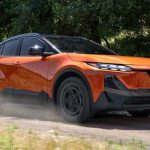
Uber and autonomous driving company Wayve have moved another step closer to launching self-driving ride-hailing services in London after Transport for London (TfL) granted Private Hire Vehicle licences to a fleet of autonomous Ford Mustang Mach-E electric SUVs.
The approval clears a major regulatory hurdle for the companies as they prepare to offer Londoners the opportunity to experience autonomous rides through the Uber app.
The licensed Mustang Mach-E vehicles are equipped with Wayve’s AI Driver technology, along with surround-view cameras and radar sensors. TfL inspected the vehicles to confirm they meet the authority’s policy and safety requirements.
Autonomous Ford Mustang Mach-E Rides Coming to Uber
The vehicle licences complete what Uber and Wayve describe as a “triple-lock” requirement for private-hire trips in London.
Under the system, the operator, driver and vehicle must all be licensed by the same authority. With the vehicles now licensed by TfL, the companies have cleared another important step toward beginning passenger trials.
The autonomous rides will operate under the UK Government’s AV Trialling Code of Practice and Uber’s existing TfL Private Hire Operator licence.
Although the Mustang Mach-E vehicles will handle the driving using Wayve’s autonomous technology, a trained, TfL-licensed private-hire driver will remain in the vehicle. The safety driver will monitor the system, provide assistance and take control when necessary.
The approach is designed to allow Uber and Wayve to gather real-world passenger feedback while continuing to evaluate the technology in one of Europe’s most demanding urban driving environments.
More Than 100,000 Londoners Have Signed Up
Interest in autonomous Uber rides appears to be substantial.
More than 100,000 London residents joined Uber’s Interest List during the eight weeks leading up to the latest announcement. Those users will have an opportunity to be matched with a Wayve autonomous ride when the service begins its initial rollout.
Later this summer, selected members of the Interest List are expected to receive access to Wayve-powered rides. Their feedback will help Uber and Wayve refine the passenger experience ahead of a broader public launch.
The strong early demand highlights growing consumer interest in autonomous transportation, particularly when the technology is integrated into an established ride-hailing platform such as Uber.
Wayve’s AI Driver Takes a Different Approach
Wayve’s autonomous driving system is based on an AI-first approach the company calls AV2.0.
Unlike many earlier autonomous vehicle systems that depend heavily on high-definition maps, manually coded driving rules and tightly controlled geofenced areas, Wayve’s technology is designed to learn from driving experience.
The company says its AI Driver can adapt to different roads, traffic conditions, vehicles, weather and cities without requiring the same level of hand-coded rules or mapping infrastructure.
Wayve began testing its autonomous driving technology on London’s roads in 2018. The company says the system has since demonstrated its adaptability across more than 500 cities worldwide.
That experience could be particularly important in London, where narrow streets, complex intersections, cyclists, pedestrians, buses and rapidly changing traffic conditions create a demanding environment for autonomous vehicles.
Why the Ford Mustang Mach-E?
The Ford Mustang Mach-E provides Wayve with an all-electric platform for its London autonomous ride-hailing program.
Using electric vehicles also fits with Uber’s broader strategy of increasing the use of electric, shared and autonomous transportation. Combining an EV with autonomous technology could eventually reduce operating costs while also lowering emissions and noise compared with conventional gasoline-powered ride-hailing vehicles.
For now, however, the licensed Mustang Mach-E vehicles will continue operating with a trained safety driver onboard during the trial phase.
Uber Expands Its Autonomous Vehicle Strategy
The Wayve partnership is part of Uber’s wider push into autonomous transportation.
Uber says it now works with more than 30 autonomous vehicle partners and that millions of autonomous trips are completed through its network each year.
Rather than replacing human drivers entirely, Uber envisions a hybrid transportation network in which autonomous vehicles and human-driven vehicles operate alongside one another.
The company believes this model could eventually make transportation more affordable and accessible while increasing the availability of electric and autonomous mobility.
For Wayve, the London program represents an important opportunity to put its AI-based autonomous driving technology into a commercial ride-hailing environment in its home market.
With TfL now approving the Mustang Mach-E vehicles, the next major milestone will be getting passengers into the cars and collecting real-world feedback.
If the upcoming trials go as planned, autonomous electric rides could soon become a much more visible part of London’s transportation network.