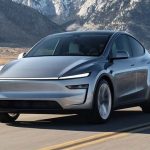
Rivian Automotive reported record vehicle deliveries in the third quarter of 2026, reinforcing confidence in its full-year sales target as the new R2 electric SUV begins to expand the automaker’s reach beyond the premium EV market.
The company delivered 19,248 vehicles between July and September, a 46% increase from the 13,201 vehicles delivered during the same period last year. The result also exceeded analysts’ average estimate of 18,001 vehicles, signaling continued momentum as Rivian ramps up production of its more affordable electric SUV.
Rivian reaffirmed its 2026 delivery guidance of 65,000 to 70,000 vehicles, a target that would make this its strongest sales year to date.
The new Rivian R2 is central to the company’s growth strategy. Deliveries began in June, making the third quarter its first full quarter on the market.
Unlike the larger R1S electric SUV and R1T electric pickup, which target the premium segment, the R2 is designed to attract a broader range of EV buyers with a smaller footprint and a lower starting price. The model currently starts at just under $60,000, with less expensive versions planned that could bring the entry price to around $45,000.
Rivian expects to deliver between 20,000 and 25,000 R2 SUVs by the end of 2026. Achieving that goal would give the new model a strong start in an increasingly competitive electric vehicle market.
Although Rivian did not disclose the number of R2 units delivered during the third quarter, the latest results suggest the company is making progress with its production ramp-up.
The R2 arrives at a challenging time for the U.S. EV industry, with the end of federal electric vehicle tax credits, tariffs and softer market demand adding pressure on automakers. A more accessible vehicle could help Rivian reach customers who have been priced out of its existing lineup.
Rivian’s reaffirmed delivery target puts the company on track for a potentially record-breaking year, but the fourth quarter will be critical.
To reach the lower end of its annual guidance, Rivian needs to deliver at least 23,193 vehicles in the fourth quarter, representing an increase of approximately 20.5% from its third-quarter total. Reaching the upper end of the target would require an even stronger finish.
The company produced 19,751 vehicles at its manufacturing facility in Normal, Illinois, during the third quarter, exceeding its delivery total by 503 units.
Analysts estimate Rivian will deliver an average of 66,685 vehicles in 2026, placing their expectations within the company’s forecast range.
The R2 production ramp will be a key factor in determining whether Rivian can meet those projections. Higher production volumes in the coming months would help the automaker build on its recent momentum and move beyond the roughly 50,000-vehicle annual sales level that has constrained its growth in recent years.
Rivian Expands Production Capacity
Rivian is manufacturing the R2 at its existing Normal, Illinois, facility, where it has expanded production space to accommodate the new SUV.
The company is also developing a new factory near Atlanta, Georgia, designed to support significantly higher production volumes. Rivian expects the facility to eventually have capacity for as many as 300,000 vehicles annually, with room for further expansion.
That additional capacity could become increasingly important if the R2 attracts strong demand and helps Rivian move toward a larger share of the mainstream electric vehicle market.
However, expanding production while keeping costs under control remains a major challenge. Rivian has faced substantial financial losses as it invested in manufacturing facilities, vehicle development and the infrastructure needed to support its long-term ambitions.
The R2 is expected to play an important role in improving the company’s financial performance by bringing more customers into the brand and increasing production scale.
Uber Partnership Adds a Robotaxi Opportunity
Rivian’s growth strategy extends beyond traditional vehicle sales. In March, the company announced a long-term partnership with Uber that includes an agreement for the ride-hailing company to invest up to $1.25 billion in Rivian.
The partnership calls for the deployment of fully autonomous R2 SUVs as robotaxis beginning in 2028.
Autonomous ride-hailing could create an additional source of demand for the R2 while giving Rivian a potential foothold in the emerging robotaxi market. However, the opportunity will depend on the development of reliable autonomous technology, regulatory approvals and the economics of operating driverless vehicles at scale.
Rivian has placed greater emphasis on autonomy as part of its long-term strategy, even as it continues working toward sustainable profitability. The company previously pushed back its target for achieving profitability in 2027 to invest more heavily in autonomous driving technology.
Rivian’s Next Challenge Is Turning Growth Into Profit
Rivian’s record third-quarter deliveries represent an encouraging milestone, but sustained growth will depend on more than increasing sales.
The company must scale R2 production, meet its delivery commitments and manage costs while competing in a U.S. EV market facing economic and policy challenges. The planned lower-priced R2 variants could broaden its customer base further, provided Rivian can bring them to market at competitive prices.
The company is scheduled to report its full third-quarter financial results on October 29, when investors will get a clearer picture of revenue, margins, cash usage and progress toward profitability.
For now, Rivian’s delivery figures suggest that the R2 is beginning to support its next phase of growth. Whether the new SUV can deliver the production scale and financial improvements Rivian needs will become clearer over the coming quarters.