
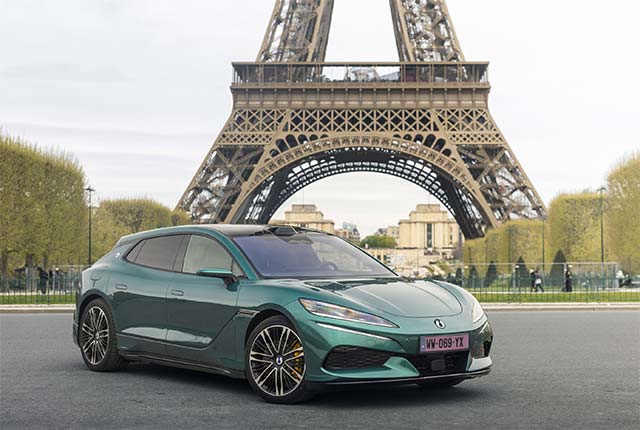
Electric vehicle adoption is no longer a niche trend — it’s becoming the defining force of the global auto industry. While the United States continues to face slower EV growth and policy uncertainty, markets across Europe, China, Southeast Asia and Latin America are rapidly accelerating the transition to electric mobility.
According to the latest data from the International Energy Agency, global electric car sales exceeded 20 million units in 2025, representing roughly one-quarter of all new vehicles sold worldwide. And despite geopolitical tensions, shifting subsidy programs and growing trade disputes, EV demand is expected to continue climbing in 2026 and beyond.
Europe Leads Major Markets in EV Growth
Among the world’s largest EV markets, Europe posted the strongest growth in 2025. Electric car sales jumped more than 30%, with EVs accounting for 28% of all new car sales across the region.
Tighter European Union CO2 emissions standards played a major role in accelerating adoption, forcing automakers to expand their electric lineups and introduce more affordable EV models. Europe is now on track for one in every three new vehicles sold in 2026 to be electric.
At the same time, soaring fuel prices linked to the ongoing Middle East energy crisis have highlighted one of the EV market’s biggest advantages: dramatically lower running costs. In the EU, annual fuel savings from driving an EV increased by around 35% compared with 2025 levels.
For consumers and fleet operators alike, the economics of electrification are becoming harder to ignore.
China Remains the Global EV Powerhouse
No market continues to shape the global EV landscape more than China.
Electric vehicles represented nearly 55% of all new car sales in China during 2025, even as growth slowed slightly following temporary adjustments to the country’s trade-in incentive program. Preliminary 2026 data already shows EV sales rebounding strongly, with electric cars exceeding 60% of monthly sales in some periods.
China’s dominance extends far beyond domestic demand.
The country accounted for nearly 75% of global EV production in 2025 and supplied roughly 60% of all electric vehicles sold worldwide. Chinese automakers also exported a record number of EVs, with overseas shipments surpassing 2.5 million units.
Brands such as BYD are reshaping global competition by offering affordable electric vehicles at price points many Western automakers still struggle to match.
Affordability has become one of China’s biggest competitive advantages. More than two-thirds of EVs sold in China were already cheaper than the average gasoline-powered vehicle in 2025. In some segments, electric cars have effectively overtaken internal combustion engine vehicles altogether.
Chinese battery giant CATL also continues to dominate the battery supply chain, supplying roughly 80% of batteries used in China’s electric truck market.
Southeast Asia and Latin America Emerge as Fast-Growing EV Regions
One of the biggest surprises in the global EV transition has been the explosive growth in emerging markets.
Electric vehicle sales in Southeast Asia more than doubled in 2025, reaching nearly 20% market share. Countries including Thailand, Indonesia and Viet Nam are rapidly scaling adoption thanks largely to affordable Chinese imports and expanding government incentives.
Meanwhile, EV sales in Latin America surged by 75%, led by Brazil and Mexico.
These markets are disproving the long-standing assumption that electric vehicles are too expensive for developing economies.
In Thailand, EV prices have remained on par with gasoline-powered vehicles for the past two years. In Viet Nam, strong domestic manufacturing and aggressive adoption targets could eventually push EV market share above 80% by 2035.
The United States Risks Falling Behind
While EV momentum accelerates globally, the U.S. market is increasingly looking like an outlier.
Electric vehicles remained below 10% of total vehicle sales in the United States during 2025, with growth largely stagnating compared to other regions. The rollback of EV tax credits and continued restrictions on Chinese automakers entering the U.S. market have created additional challenges.
For American EV startups like Rivian and Lucid Motors, slower domestic growth raises the stakes considerably.
Legacy automakers still benefit from profitable gasoline and hybrid vehicle sales, but analysts increasingly warn that delaying EV investment could weaken long-term competitiveness. Companies that scale back electrification efforts risk losing valuable experience in battery development, software integration and manufacturing efficiency.
Honda has already drawn criticism after reportedly canceling several EV projects, a move some analysts view as strategically risky in a market increasingly defined by software-driven electric platforms.
Electric Trucks and Software-Defined Vehicles Gain Momentum
The electrification trend is no longer limited to passenger cars.
Global electric truck sales more than doubled in 2025, reaching 9% of worldwide truck sales. China once again led the market, where one in four new trucks sold was electric.
Although electric trucks remain significantly more expensive upfront than diesel models, falling battery costs are rapidly improving total ownership economics. Europe is expected to reach cost parity between electric and diesel trucks by around 2030.
Meanwhile, automakers are increasingly shifting toward “software-defined vehicles” — highly connected EVs built around centralized computing systems, over-the-air updates and AI-powered driver assistance features.
Companies such as Tesla and BYD helped pioneer this approach, which is now becoming a central battleground for the future auto industry.
Autonomous taxi services, all-electric in many cases, are already operating commercially in more than 20 cities globally, primarily in China and the United States.
EVs Are Becoming a Major Energy Security Tool
The recent global energy crisis has also reinforced the strategic importance of electrification.
Road transport currently accounts for nearly half of global oil demand. In 2025 alone, EV adoption displaced an estimated 1.7 million barrels of oil consumption per day worldwide.
By 2030, that figure could rise to around 5 million barrels per day.
For oil-importing economies, EV adoption is increasingly viewed not just as a climate strategy, but also as an energy security measure. China — the world’s largest oil importer — could displace approximately 2.7 million barrels of oil demand annually by 2030 through electrification alone.
The Global EV Race Is Accelerating
Despite political pushback in some regions, the broader direction of the automotive industry appears increasingly clear.
Global EV sales are expected to climb to roughly 23 million units in 2026, representing about 28% of all new vehicle sales worldwide. By 2035, electric vehicles could account for around half of all global car sales under current policy trajectories.
The biggest winners are likely to be automakers capable of scaling affordable EV production, securing battery supply chains and mastering software-defined vehicle technology.
The biggest losers may be companies that hesitate too long.
As the global auto market shifts further toward electrification, the gap between EV leaders and laggards is becoming increasingly difficult to close.


