


Renault is looking to redefine the electric family vehicle with the E-Space Concept, a futuristic electric MPV that combines the design heritage of the original Renault Espace with advanced technology, a spacious cabin, and a strong focus on passenger comfort.
First introduced in 1984, the Renault Espace helped establish the modern multi-purpose vehicle (MPV) concept. With the E-Space Concept, Renault revisits that philosophy for the electric era, offering an alternative to the SUVs that currently dominate the automotive market.
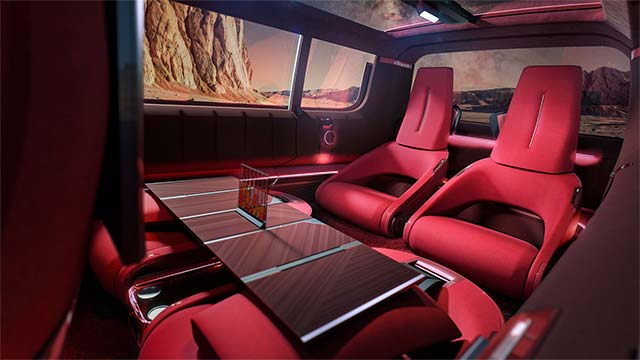
The concept puts people and their everyday needs at the centre of the design. Its defining features include a glass-dominated cabin, six individual seats, a panoramic digital display, and an interior that draws inspiration from contemporary architecture and furniture design.
Renault has not announced production specifications, battery capacity, driving range, or pricing for the E-Space Concept. For now, the vehicle serves as a design study showcasing the brand’s vision for future electric mobility.
Renault E-Space Concept: A Modern Take on the Original Espace
Measuring 4.70 metres long, 2.02 metres wide, and 1.67 metres tall, the Renault E-Space Concept has generous proportions while maintaining a lower, more streamlined profile than a typical SUV.
Its short overhangs and 23-inch wheels positioned at the corners of the body give the vehicle a planted stance. A low waistline, moderate ground clearance, and an extended windscreen that flows into the bonnet recall the original Espace’s distinctive silhouette, including its resemblance to a high-speed train.
The exterior design follows a minimalist approach, with clean surfaces and carefully integrated details. A distinctive U-shaped lighting signature wraps around the front grille, framing an illuminated Renault logo that appears to float within a pixel-inspired lighting arrangement. A corresponding light signature at the rear reinforces the concept’s futuristic appearance.
Renault has also incorporated aerodynamic elements into the design. A movable front splitter can lower closer to the road at higher speeds, while the dark lower section of the body visually represents the vehicle’s technical platform, including its battery and aerodynamic components.
The rear spoiler references earlier generations of the Espace, connecting the concept’s modern styling with the model’s history.
A Glass Roof and Panoramic Cabin
One of the most striking features of the Renault E-Space Concept is its extensive use of glass. The side windows extend unusually low into the bodywork, while the expansive glass roof allows natural light to reach throughout the passenger compartment.
The approach takes inspiration from Bauhaus architecture, particularly the work of architect Ludwig Mies van der Rohe. Rather than designing a conventional car interior and enclosing it within a body, Renault’s designers began with the passenger space and developed the exterior around it.
The result is a cabin that appears almost like a glass bubble surrounded by flowing body panels. The low window line improves outward visibility and creates a more open atmosphere for passengers.
Double rear-hinged doors without a central pillar provide a wide opening into the cabin, further emphasising the concept’s focus on accessibility and interior space.
Six Individual Seats and a Flexible Interior
The E-Space Concept features six individual seats arranged across three rows, with a completely flat floor that enhances the feeling of space.
Rather than using conventional automotive bucket seats, Renault has drawn inspiration from furniture design. The slim seats feature sculpted shells and lightweight-looking structures, while soft textiles add warmth to the otherwise high-tech cabin.
The seating arrangement is designed to adapt to different passenger needs. The two seats in the second row can swivel through 180 degrees, allowing occupants to face the third row and create a lounge-like seating area reminiscent of a train compartment.
In their forward-facing position, second-row passengers have access to folding tray tables and 12.3-inch screens mounted on the backs of the front seats. The second-row seats can also fold down to create a large table for passengers in the rear.
A sliding central console adds further flexibility. Its features include an air purifier, a small refrigerator, video game controllers, and even a Connect 4 game, reinforcing Renault’s idea of the car as a shared living space rather than simply a means of transportation.
The cabin also features integrated ambient lighting, reading lights mounted along the glass roof, and quilted fabric door handles. These details combine a welcoming atmosphere with the concept’s futuristic design.
Panoramic Digital Display and Steer-by-Wire Technology
Technology plays a central role in the Renault E-Space Concept, particularly through its OpenR Panorama display.
Measuring 1,130 mm wide and 110 mm high, the curved screen stretches across the cabin, replacing the conventional dashboard layout with a continuous digital interface. Renault says the technology will feature in future models from its executive range, with the next-generation Rafale and Scenic identified as the first models expected to receive it.
Interestingly, the panoramic display itself is not designed to be touch-sensitive. Instead, drivers interact with its functions through two smaller, flexible touchscreens positioned around the steering column. This arrangement allows the main display to remain close to the road-facing sightline while reducing the need for a traditional dashboard.
The concept also features steer-by-wire technology. Unlike a conventional steering system, which uses a mechanical connection between the steering wheel and the wheels, steer-by-wire relies on electronic signals to control steering inputs.
This technology allows Renault’s designers to develop a compact steering wheel with fewer physical constraints, opening up additional space and creating a cleaner cabin layout.
However, Renault has not confirmed whether all these features will reach production in the same form.
Bold Colours and More Sustainable Materials
The interior of the E-Space Concept also marks a return to the vivid colours associated with Renault’s designs during the 1970s.
Red tones dominate the cabin, ranging from scarlet and purple to garnet. A thick, three-centimetre carpet features a coral centre that gradually darkens towards the edges, creating a distinctive visual effect beneath the six seats.
Metal-finished controls and decorative details provide a premium contrast to the softer materials. Some of the trim uses straw-based marquetry rather than conventional wood, highlighting Renault’s interest in alternative materials and craftsmanship.
Sustainability is another important part of the concept. Renault has been working towards incorporating 30% recycled materials across its vehicle range, while the E-Space Concept explores additional uses for bio-based materials.
The cabin includes trim made from dyed straw, a floor covered in 100% wool carpet, and interior paint formulated with 18% bio-based resin. The steering wheel combines fabric with a material containing 26% castor oil and 25% organic cotton.
Even the tyres reflect this approach. Michelin tyres fitted to the concept contain an average of 19% natural rubber sourced from managed rubber plantations.
These materials demonstrate how future vehicle interiors could move beyond traditional leather and wood towards renewable alternatives without abandoning the emphasis on design and comfort.
Renault’s Vision for the Future of Electric Family Cars
The Renault E-Space Concept represents a broader design direction for the French automaker. Its focus on flexible seating, natural light, intuitive technology, and alternative materials reflects the brand’s ‘voitures à vivre’ philosophy, which places everyday life and passenger experience at the centre of vehicle development.
Renault Brand CEO Fabrice Cambolive describes the concept as a way to bring the pioneering spirit of the original 1984 Espace into the electric era. Design director Alexandre Malval also highlights the importance of simplicity, clean surfaces, and a recognisable identity in a market increasingly dominated by SUVs.
The concept does not yet provide details about its electric powertrain, battery size, range, charging performance, or potential production date. It is therefore too early to determine how a production version might compete with existing electric family vehicles.
Nevertheless, the E-Space Concept offers a glimpse of an alternative approach to the electric family car. Instead of focusing primarily on SUV styling, Renault is exploring how an electric MPV could deliver a more open, adaptable, and comfortable passenger environment.
Whether these ideas eventually reach showrooms remains to be seen, but the concept demonstrates that the future of electric family transportation does not have to revolve exclusively around SUVs.


