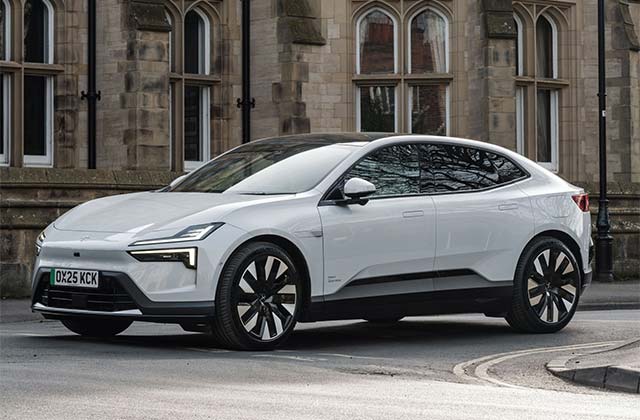
Electric car performance has traditionally been measured through horsepower, acceleration times and cornering forces. However, a new pilot study involving researchers from the University of Oxford and Polestar suggests that the real driving experience goes beyond the numbers on a specification sheet.
The research examined how drivers physically and psychologically respond to performance behind the wheel, combining vehicle telemetry with heart-rate monitoring, eye tracking, psychological assessments and driver interviews. The findings suggest that a high-performance electric car is not just about delivering more power, but also about creating a sense of confidence, control and engagement.
The pilot study brought together researchers from the University of Oxford’s SDG Impact Lab and Swedish electric car brand Polestar. Twelve drivers tested two versions of the Polestar 4 at Gotland Ring in Sweden, driving in both calm and dynamic conditions.
The vehicles included the rear-motor Polestar 4 and the more powerful Dual Motor version equipped with the Performance pack. Researchers monitored participants’ physical responses and attention while collecting vehicle data to understand how changes in driving conditions and performance affected the driver.
During dynamic driving, participants blinked less frequently, their pupils became larger and they maintained their gaze for longer periods. These changes are consistent with increased attentional engagement, suggesting that demanding driving conditions can produce measurable changes in how drivers focus on the road.
By connecting these responses with vehicle telemetry, the researchers were also able to investigate how the car’s behavior influenced the driver’s physiological activation.
Although the research remains a pilot study involving a relatively small group of participants, it offers an interesting approach to understanding electric car performance beyond conventional engineering measurements.
The comparison between the two Polestar 4 versions highlighted significant differences in their performance capabilities.
The standard rear-motor model produces 200 kW (268 hp), while the Dual Motor version with the Performance pack delivers 400 kW (544 hp). That gives the performance-focused model twice the power of the rear-motor version.
During matched fast laps, the Dual Motor Performance model achieved 32% higher peak acceleration while requiring 15% less steering effort on the circuit. It also generated greater cornering loads and experienced hard-acceleration events more frequently.
These findings illustrate how additional power and the vehicle’s overall performance characteristics can change the driving experience. However, the study also suggests that the driver’s perception of performance cannot be explained by acceleration and cornering forces alone.
The drivers’ own assessments reinforced the differences observed during testing.
On the study’s Performance/Dynamics scale, the Polestar 4 Dual Motor with Performance pack scored 89.2 out of 100, compared with 67.7 for the rear-motor version.
The performance model also received a higher score for overall experiential quality, achieving 93.0 compared with 77.9 for the rear-motor car. Most participants rated the Performance version more highly in both categories.
These results indicate that the more powerful model delivered a more engaging experience for most of the drivers involved in the study.
However, the interviews revealed that the appeal of performance driving was not simply about stronger acceleration or more intense cornering. Participants also highlighted the importance of trust in the vehicle, predictable responses, a sense of control and sustained concentration.
Several drivers independently compared the experience to a “controlled roller coaster,” describing a combination of excitement and confidence rather than simply raw speed.
One participant summarized the feeling by saying the car “makes you feel like a better driver than you are.”
That observation reflects an important distinction in performance-car development: a vehicle can feel exceptionally capable when its responses are predictable and allow the driver to remain confident, even under demanding conditions.
As electric vehicles continue to deliver increasingly impressive acceleration and power figures, traditional performance metrics may become less effective at explaining what makes one car feel better to drive than another.
Electric motors can deliver immediate torque, while advanced chassis engineering, suspension tuning and power distribution can influence how a vehicle behaves through corners. Yet the way drivers interpret those characteristics remains an important part of the overall experience.
Christian Samson, Head of Product Attributes at Polestar, said the collaboration with the University of Oxford was intended to explore an aspect of performance that cannot be captured by specifications alone: the human experience behind the wheel.
Max Klapow, a doctoral researcher at Oxford’s SDG Impact Lab, emphasized that performance is not simply about going faster. He said predictable vehicle responses can help drivers develop a sense of confidence and control.
By combining physiological measurements with vehicle data and driver feedback, the research could help manufacturers better understand the relationship between engineering decisions and the experience they create.
The approach may eventually provide additional ways to evaluate performance vehicles, complementing established measures such as acceleration, braking distances, lateral acceleration and lap times.