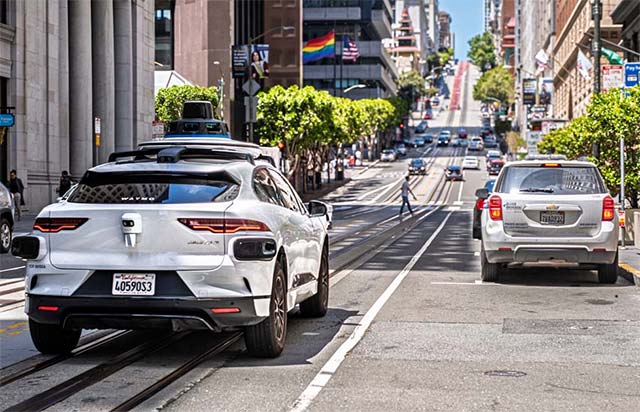
Waymo’s robotaxis have now driven more than 270 million miles without a human driver behind the wheel, and the company says its latest safety analysis shows a significant reduction in injury-causing crashes compared with human drivers.
According to Waymo’s latest data, the Waymo Driver was involved in 82% fewer crashes resulting in injuries than human drivers across the five major U.S. metropolitan areas included in the analysis. The company says that translates to at least 841 injury-causing crashes avoided over the accumulated autonomous miles.
The numbers become even more notable when looking at serious collisions.
Waymo’s analysis covers fully autonomous operations through the end of June 2026 in Atlanta, Austin, Los Angeles, Phoenix and San Francisco.
Across those markets, Waymo says its autonomous driving system was involved in 95% fewer crashes resulting in serious injuries or worse compared with human drivers. The company describes this as roughly a 20-fold reduction in these more severe crashes.
The safety advantage also extends to vulnerable road users.
Waymo reports:
– 93% fewer injury-causing pedestrian crashes
– 86% fewer injury-causing cyclist crashes
– 82% fewer injury-causing motorcycle crashes
– 82% fewer injury-causing crashes overall
– 95% fewer serious injury-or-worse crashes
These figures are based on Waymo’s comparison of its autonomous driving performance with human-driver benchmarks.
The latest analysis represents a substantial amount of real-world autonomous driving. Waymo says its vehicles have accumulated more than 270 million fully autonomous miles through the end of June 2026.
That distance is equivalent to driving the length of historic Route 66 more than 110,000 times.
Waymo uses the accumulated mileage to compare its autonomous driving system with human driving performance in the same general operating environments. The company says its analysis indicates that its vehicles avoided 841 injury-causing crashes that would otherwise have occurred at the human-driver benchmark.
For perspective, the U.S. average is around 1.9 crashes per million miles when looking at the broader crash rate cited in the analysis. In the areas where Waymo operates, the rate of incidents involving injuries is higher.
Waymo reports an operational injury-causing crash rate of just 0.67 incidents per million miles. In San Francisco, where the human-driver benchmark cited by the company reaches approximately 6.64 injury-causing incidents per million miles, Waymo says its performance remains substantially lower.
Robotaxis Still Face Public Scrutiny
The safety numbers come as autonomous vehicles continue to attract significant public attention.
Robotaxis can behave differently from conventional vehicles, particularly in unusual traffic situations. Stopping unexpectedly, taking conservative maneuvers or navigating complex intersections can make autonomous vehicles appear less predictable to people accustomed to human driving behavior.
Waymo has also faced criticism and occasional operational problems, including reports involving vehicle behavior and interactions with surrounding traffic.
Those incidents are important when evaluating autonomous driving technology, but the latest safety analysis focuses specifically on collisions and injuries across hundreds of millions of autonomous miles.
Waymo says the Waymo Driver also undergoes a formal safety review before deployment on public roads, adding another layer to the company’s development and deployment process.
What the Numbers Could Mean for Autonomous Driving
If Waymo’s reported results continue as autonomous operations expand, the potential impact extends beyond robotaxi passengers.
A large share of serious road injuries involves people outside the vehicle, including pedestrians, cyclists and motorcyclists. The reductions reported by Waymo in those categories suggest that improvements in autonomous driving performance could potentially affect overall road safety rather than simply reducing risk for robotaxi passengers.
However, the data should still be viewed in context. Waymo’s figures are based on the company’s own safety analysis and comparisons with human-driving benchmarks. Autonomous driving performance can also vary depending on geography, road design, weather, traffic conditions and the types of roads on which the vehicles operate.
Waymo is expanding into additional markets, including areas with more challenging weather conditions. Those operations will provide additional data on how autonomous vehicles perform in snow and other environments that can be more difficult for driver-assistance and autonomous systems.
For now, more than 270 million autonomous miles provide a substantial real-world dataset. According to Waymo, that experience is showing a meaningful reduction in injury-causing crashes compared with human driving—and the difference becomes even larger when serious collisions are considered.