
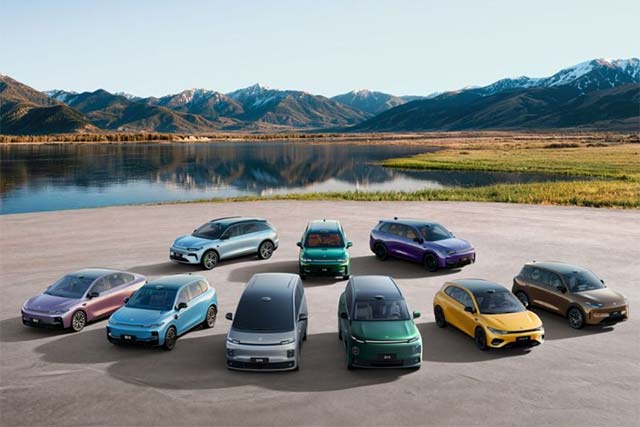
Electric vehicles are expected to account for more than a quarter of all cars sold worldwide in 2026, marking a major increase from just 9% five years ago, according to BloombergNEF’s latest Electric Vehicle Outlook.
BloombergNEF forecasts that EVs will represent more than half of global passenger vehicle sales by 2035, supported by lower lithium-ion battery prices, a growing number of affordable electric models and rapidly expanding demand in emerging markets.
Higher fuel prices linked to the war in Iran have also increased consumer interest in electric vehicles. However, BloombergNEF said it is still too early to determine whether the increase in pump prices will translate into a sustained near-term boost for EV sales.
China Remains the World’s Largest EV Market
China continues to dominate the global electric vehicle market. Electric vehicles now account for nearly two-thirds, or 64%, of new passenger vehicle sales in the country.
The country’s mature battery supply chain, lower input costs, competitive financing and intense domestic competition have helped Chinese automakers deliver some of the lowest-cost EVs in the world. Those advantages continue to put pressure on manufacturers in Europe and North America, where smaller production volumes and less integrated supply chains keep battery costs higher.
Emerging EV Markets Outpace the United States
BloombergNEF highlighted strong momentum in several emerging markets, where EV adoption is increasingly exceeding that of the United States.
Nearly half of all cars sold in Singapore in 2025 were electric, while EVs represented 39% of new car sales in Vietnam and 27% in Thailand. In Turkey, passenger EV sales more than doubled in one year, with electric vehicles reaching 22% of total new vehicle sales.
The report points to oil import dependence, EV-focused industrial policies and greater openness to Chinese automakers as major drivers behind the rapid growth.
Chinese brands played a central role in Thailand, where they accounted for 88% of all EVs sold in 2025. However, BloombergNEF said high EV adoption is also possible without a heavy reliance on Chinese manufacturers.
Vietnam is a clear example. EV sales there nearly doubled to 179,000 units in 2025, with domestic automaker VinFast accounting for 98% of the market. In Turkey, local manufacturer Togg became the country’s second-largest EV brand in 2025, behind BYD.
EV Growth Set to Reshape Global Oil Demand
The rapid expansion of electric vehicles is expected to have a significant impact on global road fuel consumption.
BloombergNEF forecasts that total road fuel demand will peak in 2029. Under its Economic Transition Scenario, fleet electrification and fuel-efficiency gains are expected to avoid 25.8 million barrels per day of road fuel demand by 2040.
That reduction would be four times greater than the combined oil displacement expected across aviation, shipping and petrochemicals.
EV Outlook Revised Lower in China and the US
Despite the strong global outlook, BloombergNEF has reduced its EV adoption forecast for a second consecutive year, mainly due to slower expected growth in China and the United States.
In China, tighter incentive eligibility rules and a more mature market are expected to moderate growth. In the US, EV sales are projected to fall 19% in 2026 following the rollback of federal support, including fuel-economy targets and parts of the Inflation Reduction Act.
As a result, EVs are expected to make up only 24% of the total US vehicle fleet by 2040.
Affordability and Fleet Turnover Remain Major Challenges
Vehicle affordability remains one of the biggest barriers to wider EV adoption. In major European markets including Germany, Italy and the UK, battery-electric vehicles remain around 17% more expensive than comparable internal combustion engine models.
The price gap has narrowed considerably from 34% in 2024, but battery costs remain the largest contributor to EV pricing.
BloombergNEF also noted that replacing the global vehicle fleet will take decades. While EV sales are rising quickly, electric passenger vehicles are not expected to outnumber combustion-engine vehicles on the road until 2047.
By 2040, more than one billion internal combustion passenger cars are still expected to remain in use worldwide, alongside most trucks, vans, buses and two-wheelers.
The outlook shows that EV adoption is accelerating faster than many markets expected just a few years ago. However, lower prices, stronger charging infrastructure and faster fleet replacement will remain essential for electric vehicles to fully displace combustion-powered transport.
[source: BloombergNEF]


