
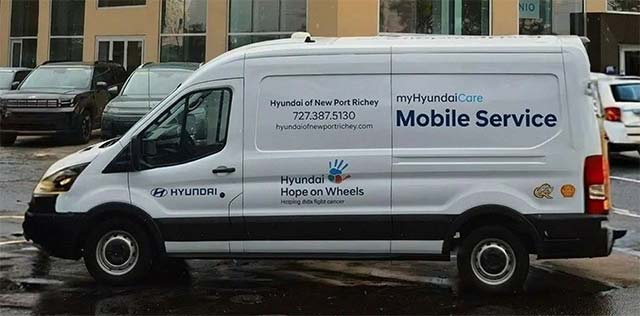
Hyundai Motor Company is expanding its mobile service program across the United States, aiming to make vehicle maintenance and basic repairs more convenient for EV and combustion vehicle owners alike.
Following a successful pilot program with dealers, Hyundai plans to grow its mobile service network to 150 active service vans by the end of the year. The initiative is designed to reduce dealership visits for routine maintenance while improving service accessibility as Hyundai’s sales continue to grow in the U.S.
The new dealer-operated mobile service vans are fully equipped with factory-approved tools, software, and Dealer Management System (DMS) integrations. Each vehicle is staffed by factory-trained technicians using genuine Hyundai parts, ensuring customers receive dealership-level service at their homes or workplaces.
The program mirrors the mobile service strategies already used by EV-focused automakers such as Tesla and Rivian, both of which have relied heavily on mobile technicians to improve customer convenience and reduce wait times at service centers.
Hyundai’s mobile units can perform a wide range of approved maintenance and repair tasks, including:
– Software updates
– Tire rotations
– Brake pad and rotor replacements
– Service campaigns
– Vehicle washing and detailing
– Oil changes for internal combustion models
Customers can schedule appointments directly through participating Hyundai dealers’ online service portals, where mobile service options will be available.
According to Hyundai Motor America Vice President of Aftersales and Customer Experience Michel Poirier, the initiative is designed to extend the company’s myHyundaiCare ownership experience beyond traditional dealership visits.
By allowing customers to schedule maintenance at home or at work, Hyundai aims to minimize disruption and save owners valuable time. The company believes this convenience-focused approach better aligns with modern customer expectations for fast and accessible vehicle service.
Beyond improving convenience, Hyundai says the program will also help dealerships manage increasing service demand while strengthening customer loyalty throughout the ownership lifecycle. Dealers are also receiving one-on-one coaching and operational support from Hyundai to help ensure successful rollout and long-term service quality.
While the mobile service fleet will handle many routine maintenance tasks, more complex repairs and diagnostics will still require visits to a dealership service center.
As EV adoption continues to rise in the U.S., Hyundai’s expansion into mobile servicing could become an important competitive advantage, especially for owners looking for a simpler and more flexible maintenance experience.


