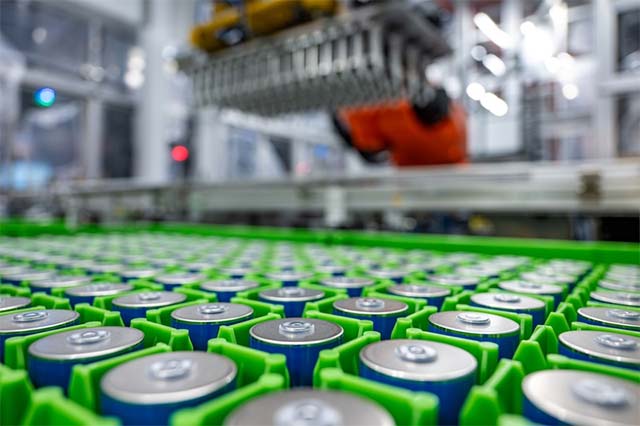
BMW is expanding its global electric vehicle battery supply network by adding Samsung SDI in Europe and LG Energy Solution in the United States as new suppliers of next-generation battery cells. The move is part of the German automaker’s strategy to strengthen regional production, diversify its supply chain and secure a reliable supply of batteries for its upcoming electric vehicles.
The two battery manufacturers will supply BMW with cells for its sixth-generation (Gen6) high-voltage batteries from their existing regional production facilities starting in the late 2020s. The partnerships further strengthen BMW’s commitment to its “local for local” approach, which prioritizes sourcing components close to vehicle production sites.
Battery cells are among the most important components of an electric vehicle, directly influencing driving range, charging performance and overall efficiency. Securing a reliable supply of advanced battery technology is therefore essential as BMW prepares to expand its next generation of electric vehicles.
Under its latest supplier agreements, BMW will source battery cells produced in Europe from CATL, EVE Energy and Samsung SDI. In the United States, LG Energy Solution will become another key supplier.
By working with several leading battery manufacturers across different regions, BMW aims to reduce its dependence on individual suppliers while improving the flexibility and resilience of its global production network.
The company says this diversified approach will also help strengthen industrial value creation in Europe and North America, supporting local manufacturing and shortening transportation distances between battery suppliers and vehicle assembly plants.
Nicolai Martin, BMW AG’s Board Member responsible for Purchasing and Supplier Network, said the company is committed to developing regional supply chains while taking advantage of global procurement opportunities.
The strategy is intended to keep BMW competitive across international markets while building stronger partnerships with battery manufacturers in key production regions.
Five New Battery Assembly Facilities Support BMW’s Gen6 Strategy
BMW’s local-for-local approach extends beyond battery cell sourcing. The automaker is also establishing battery assembly operations close to its vehicle production facilities around the world.
For its sixth-generation high-voltage batteries, BMW has built five new battery assembly facilities in strategically important locations:
– Irlbach-Straßkirchen, Germany: Supporting BMW’s battery production network in Europe.
– Debrecen, Hungary: Serving the company’s expanding European manufacturing operations.
– Shenyang, China: Strengthening BMW’s production presence in the Chinese market.
– Woodruff, United States: Supporting regional battery manufacturing in North America.
– San Luis Potosí, Mexico: Expanding the company’s battery production capabilities in Mexico.
Locating battery assembly facilities close to vehicle factories helps reduce logistics costs, shorten delivery times and improve production flexibility.
It also supports regional industrial infrastructure and employment while reducing the risks associated with long-distance transportation and disruptions to international supply chains.
Building Local Battery Supply Chains Is a Long-Term Challenge
Establishing competitive battery production in different regions is not a straightforward process. Battery cell manufacturing requires substantial investment, advanced technology, specialized infrastructure and reliable partnerships with experienced suppliers.
BMW believes that developing comprehensive regional battery ecosystems will be essential to the long-term competitiveness of the electric vehicle industry.
However, attracting battery manufacturers and establishing local production capacity also depends on favorable economic conditions, suitable industrial infrastructure and predictable government regulations.
The company is therefore pursuing a long-term strategy that combines established global battery suppliers with localized manufacturing operations.
Rather than relying on a single geographical production hub, BMW is spreading its battery supply network across major automotive markets to improve its ability to respond to changing market conditions.
BMW Expands In-House Battery Technology and Recycling Expertise
Alongside its partnerships with external battery manufacturers, BMW continues to invest in its own battery research, development and recycling capabilities.
The company operates several specialized competence centers in Bavaria, Germany, focusing on different stages of battery technology development.
The Battery Cell Competence Center (BCCC) in Munich focuses on researching and developing new battery cell technologies for future electric vehicles.
Meanwhile, the Cell Manufacturing Competence Center (CMCC) in Parsdorf investigates how these cells can be manufactured at industrial scale while maintaining high quality and resource efficiency. The facility also produces and tests near-series battery cells.
BMW is also expanding its work on battery recycling through the Cell Recycling Competence Center (CRCC) in Salching.
The facility focuses on recovering valuable raw materials from used battery cells through an innovative direct recycling process developed by BMW. The recovered materials can then be reintegrated into the battery production process.
Although Encory GmbH will build and operate the recycling competence center, BMW retains ownership of the intellectual property behind the recycling technology.
This approach reflects the company’s broader ambition to develop a more sustainable battery ecosystem, covering everything from cell development and manufacturing to material recovery and reuse.