

The average new car in America now costs over $45,000. Yet you can drive home in a brand-new electric car for under $30,000, today, no waiting list required.
That’s the story of affordable EVs in 2026. The best affordable electric cars have arrived at price points most people can actually reach, and they come with real range, fast charging, and features that don’t feel like a penalty box.
Yes, the $7,500 federal EV tax credit expired in September 2025. That stung. But manufacturers responded with lower base prices, aggressive lease deals, and their own incentives to move inventory off lots. The gap is closing faster than most buyers realize.
This guide breaks down the best affordable electric cars you can buy right now, organized by what kind of driver you are. Whether you want the cheapest possible EV, a practical family crossover, or a three-row SUV that won’t bankrupt you, there’s something on this list for you.
What Is the Most Affordable New Electric Car You Can Buy Right Now?
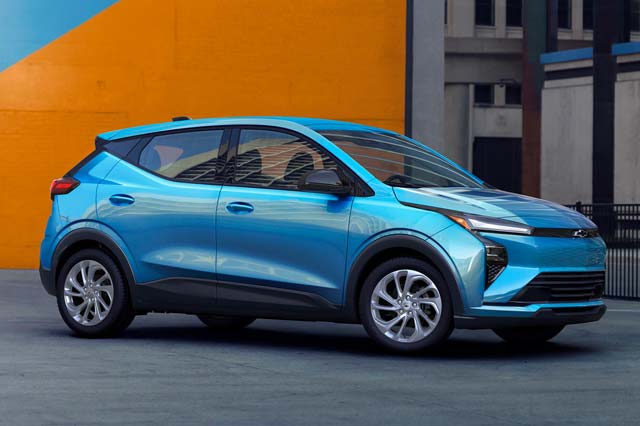
The 2027 Chevrolet Bolt EV, starting at $28,995 including destination, is the cheapest new electric car from a major automaker in the US today. It delivers 262 miles of EPA-estimated range from a lithium iron phosphate (LFP) battery, charges from 10% to 80% in about 26 minutes at 150 kW, and uses a NACS port for access to Tesla’s Supercharger network. No other new EV from a mainstream brand gets you this much for less.
The Bolt nearly disappeared entirely. General Motors killed the original Bolt in 2023, then brought it back for the 2027 model year on an updated platform. The new version is a smarter car in almost every way.
The LFP battery is a big deal for daily drivers. Unlike the nickel-rich packs used in most other EVs, LFP chemistry can handle a 100% charge every day without long-term damage. You don’t need to limit yourself to 80% to protect battery longevity. That makes the 262-mile range feel bigger in practice, because you can actually use all of it.
Chevy also gave the Bolt a 150 kW peak DC fast-charging rate, a 10-to-80% time of around 26 minutes, and vehicle-to-home (V2H) capability. For a car under $30,000, that’s a serious feature list.
The Bolt won’t win any style awards and it’s not the fastest EV on the road. But as a honest, practical daily commuter, it’s genuinely hard to beat. According to a ranked list by Cars.com, the Bolt is the lowest-priced EV on the US market heading into summer 2026.
For a deeper look at how the Bolt stacks up against the Nissan Leaf, check out our Bolt vs Leaf head-to-head comparison.

Best Affordable Electric Car for Daily Commuters: Nissan Leaf
The Nissan Leaf you remember from a few years ago was fine. The new third-generation Leaf, starting at $31,535, is something else entirely.
Nissan completely rebuilt the Leaf on a new platform. The result is a crossover-inspired hatchback with 303 miles of EPA-estimated range, a 75 kWh battery, 150 kW DC fast charging, and a 214-horsepower motor. That 303-mile range on the base S+ trim is a massive step up from the old model, which topped out around 212 miles.
The new Leaf also switched to a NACS charging port. That gives you seamless access to Tesla Superchargers across the US, the same network advantage you’d get with a Tesla. Nissan quotes a 10-to-80% charge in around 30 to 35 minutes.
Inside, it’s practical rather than flashy. You get a 12.3-inch digital gauge cluster, wireless Apple CarPlay and Android Auto, and enough room for five people plus their luggage. Higher trims step up to a 14.3-inch infotainment screen.
CarBuzz handed the Leaf their Car of the Year award for 2026, calling it the electric car every automaker claimed was unprofitable to build. InsideEVs named it their Breakthrough EV of the Year.
The Leaf doesn’t try to be exciting. It tries to be dependable, comfortable, and quiet, which is exactly what most commuters actually want from a daily driver. If range was your hesitation with older budget EVs, the new Leaf removes it.

Is the Chevrolet Equinox EV a Good Buy for the Price?
Yes. The 2026 Chevrolet Equinox EV, starting at $36,795, is America’s most affordable crossover with over 300 miles of EPA-estimated range. It delivers up to 319 miles on front-wheel-drive models and 307 miles with AWD, paired with a 17.7-inch infotainment display and a 150 kW DC fast-charging capability. For families who want a practical electric SUV without stretching past $40,000, the Equinox EV is the clearest choice available in 2026.
Independent testing by Recharged.com showed the Equinox EV hitting close to 150 kW peak DC charging speeds, adding roughly 100 miles of highway range in the first 17 minutes of a charging session. In a 20-minute rest stop break, you can realistically top up over 100 miles. That’s not the fastest EV charger out there, but it’s workable for road trips if you plan your stops wisely.
Consumer Reports noted real-world efficiency of around 30 kWh per 100 miles in AWD testing. That works out to approximately 283 miles of practical range in everyday use. Still well above what most people drive in a week.
The base LT1 comes with a standard 11.5 kW onboard charger, adaptive cruise control, automatic emergency braking, and Google Built-In navigation. That’s a generous standard feature list for the price. Optional Super Cruise adds hands-free highway driving on over 400,000 miles of mapped roads.
The one complaint that shows up consistently: the Equinox EV doesn’t offer wireless Apple CarPlay or Android Auto. That’s a real miss at this price point. It’s worth knowing before you buy.
Where the Equinox EV excels is as a one-car family solution. Spacious enough for five, practical for daily use, and capable on road trips with proper charging planning. For more on how its range compares to the competition, see our guide to 300-mile range EVs at affordable prices.

Best Affordable Electric Sedan: Tesla Model 3
The 2026 Tesla Model 3 Standard starts at $38,380, which is close to the top of this guide’s price range. But it earns its spot here because few EVs at this price deliver as much: 321 miles of EPA-estimated range, access to Tesla’s nationwide Supercharger network, and a track record of software support that keeps the car improving over time.
In real-world testing by Edmunds, the Model 3 Standard stretched to 339 miles, well above its EPA figure. That puts it among the longest real-world ranges in its class. Kelley Blue Book’s Fair Purchase Pricing suggests most buyers are paying around $36,800 in practice, below the official sticker price.
What does the Standard trim sacrifice compared to higher Model 3 trims? You lose the second-row touchscreen, FM radio, ambient lighting, heated rear seats, and power seat adjustment from the steering wheel. You also drop from 363 miles of range (Premium RWD) to 321 miles, and from a 4.9-second 0-60 to 5.8 seconds. If any of those features matter to you, the Premium at $5,500 more is worth a hard look.
What you keep is everything that makes the Model 3 worth buying: precise, engaging handling, a quiet and comfortable cabin, full Autopilot as standard, a proper heat pump, and access to the Supercharger network. The no-Android-Auto, no-Apple-CarPlay situation is a genuine frustration for some buyers. Tesla uses its own navigation system, which is capable but does cut off a workflow many people rely on.
If you primarily want an electric sedan rather than an SUV, the Model 3 is still the default answer in 2026. Nothing at this price point beats its combination of range, efficiency, and charging network access.

Does the Kia EV9 Count as Affordable for a Three-Row Electric SUV?
For a three-row electric SUV, yes. The Kia EV9, starting at $56,545, is the least expensive non-luxury seven-seat electric SUV you can buy in the US. Every other three-row EV on the market costs significantly more, including the Tesla Model X, Rivian R1S, Volvo EX90, and Cadillac Vistiq. If you need three rows and want to stay under $70,000, the EV9 is essentially your only mainstream option.
The EV9 runs on an 800-volt electrical architecture, the same technology found in Porsche’s Taycan. That means very fast charging. A 10-to-80% top-up takes around 24 minutes under good conditions.
Range on the Long Range RWD model reaches 305 miles EPA. AWD trims come in slightly lower. The base Light RWD delivers 230 miles, which is workable for daily use but shorter on road trips.
What makes the EV9 exceptional as a family vehicle goes beyond the battery. It tows up to 5,000 pounds on upper trims. It supports vehicle-to-home (V2H) power, meaning your EV can run appliances during an outage. The interior offers up to 81.7 cubic feet of cargo space with the second row folded, and it treats third-row passengers better than most three-row SUVs in its price range.
Autoblog rated the EV9 a benchmark for mainstream three-row electric SUVs. The $64,000 Wind AWD trim represents the sweet spot between features and value, though even the base Light makes a strong case for buyers on a stricter budget.
For a broader look at the three-row EV segment, including the Hyundai Ioniq 9 and Toyota Highlander EV, read our three-row EV comparison.
What Happened to the Federal EV Tax Credit in 2026?
The $7,500 federal EV tax credit expired on September 30, 2025. It no longer applies to most new EV purchases. Buyers who were counting on that incentive to close the price gap between EVs and gas cars need to recalibrate their budget before heading to the dealership.
The ripple effects have been significant. As ElectricCarsReport.com reported in March 2026, new EV sales dropped 28% in Q1 2026 after the credit disappeared. Dealer lots now carry around 130 days of EV inventory supply, compared to 89 days for gas vehicles. That surplus is pushing automakers and dealers to compete on price and incentives.
The result: many EVs are actually transacting well below sticker price right now. Manufacturers have introduced their own loyalty discounts, below-market lease rates, and cash-back programs. Chevy, Nissan, and Kia have all been actively offering promotions to move inventory in 2026.
State-level incentives still exist in many places. Colorado offers up to $5,000 on qualifying EVs. California has its Clean Vehicle Rebate Project. New York, Vermont, and Massachusetts also have active programs. Check your state’s energy office or the US Department of Energy’s incentive database before signing any paperwork.
Leasing is also worth considering. Leased EVs often still qualify for the commercial clean vehicle credit, which dealers can pass on as a lower monthly payment. Shop around, because lease deals vary widely by brand and region.
To understand how the EV market is responding to the post-credit landscape, see our April 2026 EV market update.
Coming Soon: Affordable EVs Worth Waiting For
Two upcoming models are generating real excitement for budget-conscious EV buyers.
The 2027 Kia EV3 is expected to arrive in the US in late 2026 with an estimated starting price around $35,000. Kia confirmed up to 320 miles of range on the long-range battery version, 10-to-80% DC fast charging in around 29 to 31 minutes, and a 12.3-inch dual-screen interior setup that looks far more premium than the price tag suggests. It’ll compete directly with the Bolt EV and Nissan Leaf, so all three of those cars are worth cross-shopping once the EV3 arrives. For full specs and features, read our Kia EV3 debut coverage.
The Slate Truck is the wildcard. Slate Auto, a startup backed by several high-profile investors including the Amazon founder Jeff Bezos, is building a bare-bones electric pickup starting below $25,000. The base model uses a 52.7 kWh battery with a projected 150-mile range. The optional 84.3 kWh pack bumps that to 240 miles. It’s deliberately simple, right down to roll-down windows, but offers extensive customization through vinyl wraps and accessories. It’s being assembled in the US, which matters for any future federal incentive eligibility.
If you need a truck and can live with a shorter range city vehicle, the Slate Truck could be the most disruptive affordable EV launch in years.
Conclusion
The best affordable electric cars of 2026 prove that going electric no longer means overspending or settling for something that barely covers your commute.
The Chevrolet Bolt EV at $28,995 is the cheapest entry point, with genuinely useful range and fast-charging. The Nissan Leaf at $31,535 delivers 303 miles and a well-rounded daily driving package. The Equinox EV fills the family crossover gap at $36,795. The Tesla Model 3 rounds out the sedan category at $38,380 with class-leading real-world range. And the Kia EV9 is the only practical answer for families who need three rows without going full luxury.
The federal tax credit is gone. But the deals are still out there. Check state incentives, shop lease rates, and don’t be afraid to negotiate. Dealer inventory is high and manufacturers are motivated to sell.
Before you visit a dealership, spend time with our 300-mile range EV buyer’s guide to find the right match for your budget and daily routine.


