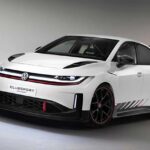
Volkswagen is taking its legendary GTI performance formula into a new era with the introduction of the ID. Polo GTI Clubsport Concept. Revealed to celebrate 50 years of the GTI badge, the electric hot hatch combines 367 horsepower, aggressive motorsport-inspired styling, and track-focused engineering.
Set to make its public debut at the Essen Motor Show, running from November 27 to December 6, 2026, the ID. Polo GTI Clubsport Concept previews just how far Volkswagen could push its electric performance cars. With a 0-100 km/h acceleration time of 4.7 seconds and a top speed of 240 km/h, the concept is significantly more powerful than the production ID. Polo GTI.
Beyond its impressive performance figures, the concept features a dramatically redesigned body, racing-inspired interior, and several mechanical upgrades intended to deliver serious track capability.
The ID. Polo GTI Clubsport Concept is based on the production Volkswagen ID. Polo GTI, but its performance hardware takes things to another level.
While the standard ID. Polo GTI produces 226 PS (166 kW), the Clubsport Concept delivers 367 PS (270 kW), an increase of 141 PS. Both vehicles use a front-wheel-drive configuration, making the concept an unusual proposition in the increasingly competitive electric performance segment.
One of the key technologies helping manage the additional power is an electronically controlled front differential lock, known as VAQ. The system is designed to distribute torque more effectively between the front wheels, improving traction and handling when accelerating out of corners.
Volkswagen quotes a 0-100 km/h (0-62 mph) time of just 4.7 seconds when using launch control. The concept can also reach a top speed of 240 km/h (149 mph), placing it firmly in high-performance hot hatch territory.
Power comes from Volkswagen’s APP550 electric motor, which produces up to 550 Nm of torque in this application, compared with the 290 Nm figure associated with its standard configuration.
APP550 Electric Motor Gets a New Challenge
One of the most interesting engineering aspects of the ID. Polo GTI Clubsport Concept is the use of the APP550 electric motor.
The motor was originally developed for larger Volkswagen Group electric vehicles, including models such as the ID.7 and the upcoming ID. Tiguan. However, Volkswagen engineers have adapted it for installation in the smaller ID. Polo, where it drives the front wheels.
Integrating such a powerful motor into a compact electric car required extensive engineering work, particularly because of the additional front differential lock and the demands of high-performance driving.
The electrical system has also been upgraded to support the increased output. The concept uses a 52 kWh high-voltage battery capable of delivering up to 290 kW of power for short periods, allowing the electric motor to reach its full performance potential.
According to Volkswagen, the APP550 has already been manufactured more than one million times at the company’s Kassel plant, demonstrating the scalability of its electric drive technology.
Aggressive Exterior Design Inspired by Motorsport
The ID. Polo GTI Clubsport Concept looks considerably more aggressive than the regular ID. Polo GTI. Although it retains the basic design language of the production model, Volkswagen has transformed its appearance with several motorsport-inspired modifications.
The most noticeable change is the switch from the production car’s four-door layout to a two-door silhouette. The body also features significantly wider wheel arches, with each side extended by 50 millimeters to accommodate the wider stance.
At the front, a large motorsport-style splitter emphasizes the car’s performance ambitions. The rear receives an entirely new diffuser and a prominent carbon-fiber rear wing that extends above the roofline.
These aerodynamic components are not simply cosmetic additions. They are designed to generate additional downforce and improve stability at high speeds, particularly during demanding track driving.
The wider rear section and flared bodywork further distinguish the concept from the standard electric Polo, giving it the appearance of a dedicated electric racing hatchback.
A Racing Interior With Two Seats and Five-Point Harnesses
Volkswagen has taken the motorsport theme inside the cabin as well. Unlike the production ID. Polo GTI, the Clubsport Concept is designed primarily around the driver and track performance.
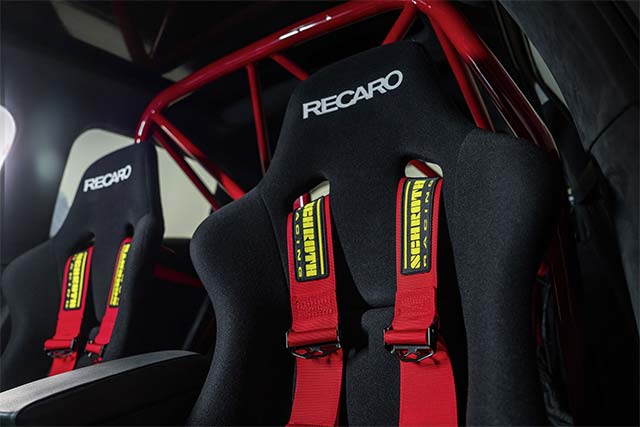
The interior features two Recaro racing bucket seats equipped with red five-point safety harnesses. The rear seats and luggage compartment have been removed to reduce unnecessary weight and create additional space for motorsport equipment.
In place of the rear seating system, Volkswagen has installed a rollover bar finished in Tornado Red, one of the signature colors associated with the GTI brand.
The dashboard, door panels, and several other interior surfaces are covered in dark ArtVelours microfibre material, complemented by red stitching.
Interestingly, Volkswagen trainees also played an important role in bringing the concept to life. Young employees worked alongside the company’s development and design teams, contributing to the interior detailing and other aspects of the vehicle.
The result is a cabin that prioritizes driving ergonomics and motorsport functionality rather than the technology and comfort features typically found in modern electric cars.
Track-Focused Suspension and Ceramic Brakes
The additional power would mean little without the chassis upgrades needed to control it. Volkswagen has therefore equipped the ID. Polo GTI Clubsport Concept with several performance-focused components.
The adaptive DCC suspension has been specifically tuned for racetrack use, with the aim of delivering more precise handling and improved traction. Combined with the electronically controlled front differential lock, the suspension is designed to help the front-wheel-drive electric hatchback manage its substantial torque.
Another major upgrade is the installation of ceramic brakes integrated into a one-box braking system. These are designed to withstand the demands of repeated high-performance braking, particularly during intensive track sessions.
Together, the suspension, differential, and braking upgrades show that Volkswagen’s concept is about more than simply increasing electric motor output.
Volkswagen Celebrates 50 Years of GTI With Four New Models
The ID. Polo GTI Clubsport Concept is part of a broader celebration marking the 50th anniversary of Volkswagen’s iconic GTI performance brand.
The original Golf GTI established the formula for the modern hot hatch when it arrived in 1976. Since then, GTI models have become one of the most recognizable performance-car families worldwide, with more than 2.5 million units sold.
Volkswagen is using 2026 to highlight the next chapter of the GTI story, with several important models and concepts introduced during the anniversary year.
These include the Golf GTI EDITION 50, the electric ID.3 GTI, the production ID. Polo GTI, and now the ID. Polo GTI Clubsport Concept.
The introduction of the first production electric GTI represents a major milestone for the brand. The Clubsport Concept goes further, demonstrating how Volkswagen could combine its traditional front-wheel-drive performance philosophy with the advantages of electric propulsion.
MEB+ Platform Shows the Potential of Electric Performance
The ID. Polo GTI Clubsport Concept is built on Volkswagen’s MEB+ modular electric platform, which provides the technical foundation for the production ID. Polo GTI.
The platform’s flexibility allows Volkswagen to explore very different approaches to electric mobility using the same basic vehicle architecture.
At one end of the spectrum is the Mission Efficiency concept, also based on the ID. Polo, which has demonstrated the potential for outstanding energy efficiency by setting three world records.
At the other end is the ID. Polo GTI Clubsport Concept, which pushes the same underlying architecture toward maximum performance.
This contrast highlights Volkswagen’s broader strategy for electric vehicles, where efficiency and driving excitement do not necessarily have to be competing priorities.