
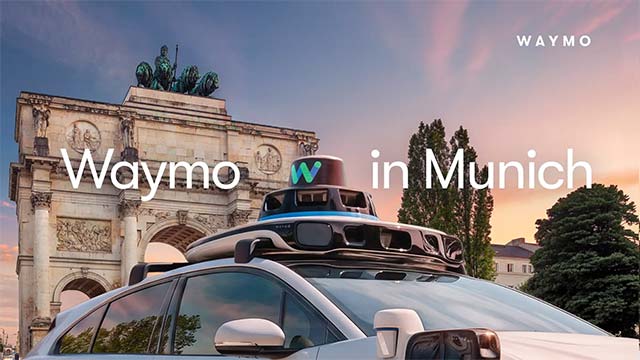
Waymo is preparing to bring its fully autonomous ride-hailing service to Munich, Germany, marking a major step in the company’s international expansion and its entry into the German market.
The Alphabet-owned autonomous driving company says it will begin manually driving its vehicles across Munich in the coming weeks as it prepares for a planned commercial robotaxi launch toward the end of 2027.
The move puts Waymo in one of Europe’s most important automotive and technology centers and could make Munich a key testing ground for autonomous ride-hailing in Germany.
Waymo will take a phased approach to its Munich expansion. The first stage will involve high-definition mapping of the city’s street network, followed by testing with trained autonomous specialists behind the wheel.
The company says this process is designed to help its Waymo Driver technology adapt to Munich’s road layouts, traffic patterns, weather conditions and other characteristics of the local driving environment.
Commercial rides will not begin immediately. Waymo is targeting the end of 2027 for the launch of its autonomous ride-hailing service, subject to the necessary regulatory approvals.
The company has already completed more than 20 million trips and now serves hundreds of thousands of commercial rides each week. Its expansion into Munich represents a significant step beyond its existing operations and gives Waymo an opportunity to demonstrate its technology in a major European city.
Germany Wants to Become a Leader in Autonomous Driving
Waymo’s arrival comes as Germany seeks to establish itself as a global center for autonomous driving technology.
Christian Hirte, Parliamentary State Secretary in Germany’s Federal Ministry of Transport, described autonomous driving as an important technology for the future of mobility and said Germany has already established a legal framework intended to support its development.
The German government sees autonomous vehicles as an opportunity not only to use advanced mobility technologies but also to develop and operate them domestically.
Munich is particularly well positioned for that push. Bavaria is home to major automakers and suppliers, research institutions, technology companies and a growing artificial intelligence ecosystem.
Dr. Florian Herrmann, Head of the Bavarian State Chancellery, said Waymo’s decision to choose Munich highlights Bavaria’s position as an international technology hub and called for faster progress from testing to real-world deployment.
Waymo Says Safety Will Remain a Priority
Safety will be a central part of Waymo’s Munich expansion.
Before autonomous rides can begin, the company will work with local, state and federal authorities on the regulatory approvals required to operate commercially. Waymo also says it plans to work with Munich’s existing transportation ecosystem rather than operate independently of public transit, cycling and pedestrian networks.
The company points to data collected across more than 350 million fully autonomous miles as evidence of its safety performance.
According to Waymo, its autonomous technology has recorded 16 times fewer serious-injury crashes compared with human drivers. The company also reports 14 times fewer pedestrian crashes involving injury and six times fewer cyclist crashes involving injury.
Those figures are based on Waymo’s own analysis and will be closely watched as the company expands into a new driving environment with different road infrastructure and traffic conditions.


