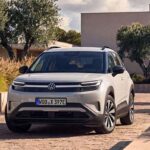
XPENG has unveiled an ambitious roadmap for the future of intelligent driving, confirming that global deliveries of its next-generation VLA 2.0 system will begin in 2027, with Volkswagen selected as the first launch partner for the Chinese market.
The reveal took place during XPENG’s “The Future” VLA Media Experience Day, where the company detailed both the architecture and global deployment strategy of its advanced AI-driven system.
A New Era of Intelligent Driving
Unlike conventional modular autonomous driving stacks, XPENG’s VLA 2.0 adopts a unified AI foundation model that integrates perception, reasoning, and action into a single system. This approach reduces reliance on high-definition maps and rigid rule-based programming, enabling more adaptive and human-like driving behavior.
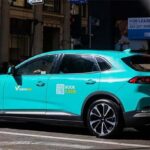
Early testing shows the system performing reliably in dense urban traffic and complex mixed-road environments. XPENG’s Robotaxi fleet equipped with VLA 2.0 has already begun public road testing, with trial operations expected to start later this year ahead of international expansion.
Designed for Real-World Complexity
VLA 2.0 is engineered to handle a wide range of challenging driving scenarios. From erratic traffic behavior and accident scenes to potholes and uneven road surfaces, the system proactively adjusts to ensure safer and smoother journeys.
Its “drive-anywhere” capability extends beyond city streets, covering rural roads, campus routes, and non-navigable paths. The system also supports full-process assisted driving, including starting from a complete stop—bringing it closer to true end-to-end autonomy.
XPENG reports a 23% improvement in driving efficiency, with testing in Guangzhou’s peak traffic showing performance comparable to experienced human drivers and surpassing traditional Level 2 systems.
End-to-End AI Architecture
At the core of VLA 2.0 is a breakthrough in system design. Traditional vision–language–action models rely on multiple processing steps, translating visual data into language before executing decisions.
VLA 2.0 eliminates this bottleneck with an end-to-end vision-to-action architecture. By directly converting perception into driving actions, the system achieves faster response times and improved operational efficiency—key factors for real-world autonomous driving.
Beyond Passenger Vehicles
XPENG’s ambitions extend far beyond cars. The AI foundation model behind VLA 2.0 is designed to power a broader ecosystem of intelligent machines, including Robotaxi services, humanoid robots, and even modular flying vehicles.
This strategy forms part of XPENG’s wider “Physical AI” vision, aimed at creating a unified intelligence layer capable of operating across multiple real-world applications.
The Road to Full Autonomy
XPENG’s leadership believes that fully autonomous driving could become a reality within the next one to three years, with VLA 2.0 positioned as a key enabler of that transition.
As the 2027 rollout approaches, the partnership with Volkswagen signals growing industry alignment around AI-driven mobility—and a future where intelligent driving becomes a seamless part of everyday transportation.