


Toyota is bringing electric power to one of its most popular nameplates. The all-new 2027 Toyota Highlander EV is the brand’s first three-row battery electric vehicle for the U.S. market — and the first Toyota EV assembled in America.
With seating for up to seven, up to 320 miles of driving range, and standard North American Charging System (NACS) compatibility, the electric Highlander is aimed squarely at families ready to go fully electric without sacrificing space or versatility.
The Highlander EV becomes Toyota’s fourth fully electric model, joining the Toyota bZ, bZ Woodland, and C-HR EV.
By the time the Highlander EV reaches showrooms, Toyota expects to offer 22 electrified models, including hybrid, plug-in hybrid, and battery electric vehicles.
Sales are expected to begin in late 2026.
Up to 320 Miles of Range
Toyota will offer multiple battery and drivetrain configurations to suit different driving needs:
– XLE FWD – 77.0-kWh battery, estimated 287 miles of range
– XLE AWD – 77.0-kWh battery, estimated 270 miles of range
– XLE AWD (Extended Range) – 95.8-kWh battery, estimated 320 miles of range
– Limited AWD – 95.8-kWh battery, estimated 320 miles of range
The 2027 Highlander EV comes standard with a NACS charging port, giving drivers access to thousands of DC fast chargers across the U.S. and Canada.
Under ideal conditions, DC fast charging can replenish the battery from 10% to 80% in approximately 30 minutes. A dual-voltage 120V/240V charging cable is included for Level 1 and Level 2 home charging.
Toyota also equips the Highlander EV with: battery preconditioning for optimized fast charging, plug & Charge capability for seamless authentication at compatible charging networks and automatic preconditioning when navigating to a fast charger via Drive Connect
Electric Performance
The 2027 Highlander EV delivers the instant torque drivers expect from an electric SUV.
– AWD models: 338 combined horsepower and 323 lb-ft of torque
– FWD models: 221 combined horsepower and 198 lb-ft of torque
With a low center of gravity and balanced weight distribution, Toyota says the electric Highlander was engineered to deliver confident acceleration and a quiet, refined ride.
AWD models also include Multi-Terrain Select and Crawl Control, expanding the SUV’s capability in varied conditions — an important feature for North American drivers dealing with snow, gravel, and mixed terrain.
Three Rows, Family-Ready Interior
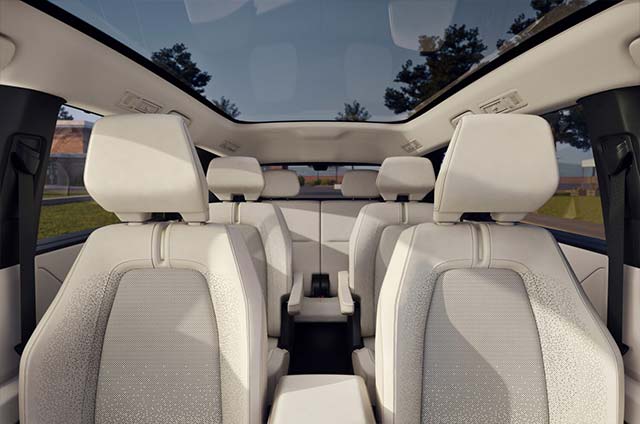
Inside, the Highlander EV features three-row seating for up to seven passengers when equipped with the available second-row bench.
Highlights include:
– 14-inch central touchscreen
– 12.3-inch digital driver display
– Standard SofTex®-trimmed seating
– Heated front seats (standard)
– Available ventilated front seats
– Available heated second-row seats
– Customizable ambient lighting
– Available panoramic glass roof (largest in Toyota’s lineup)
When extra cargo space is needed, the third row folds flat to provide more than 45 cubic feet of storage behind the second row.
Multiple device charging ports are available in all three rows, reinforcing its family-focused design.
Vehicle-to-Load (V2L) Capability
In a first for a Toyota model sold in the United States, the 2027 Highlander EV offers vehicle-to-load (V2L) functionality.
This allows the SUV to power external devices such as: camping equipment, tailgating appliances, power tools or emergency home backup during outages.
Toyota also integrates Charge Assist and ECO Charge features, helping owners optimize charging during lower-rate electricity periods or when renewable energy is available.
More details on accessories and power capacity will be announced closer to launch.
Bold New Design
The redesigned Highlander EV features:
– Full-width LED daytime running lights
– Clean body lines
– Broad fenders
– Flush door handles for improved aerodynamics
The modernized exterior aligns with Toyota’s growing EV portfolio while maintaining the Highlander’s familiar family-friendly proportions.
Built in America
The 2027 Toyota Highlander EV will be assembled at Toyota’s Georgetown, Kentucky plant. Batteries will be sourced domestically from Toyota’s new $13.9 billion battery facility in Liberty, North Carolina, along with supplier partners.
This domestic production strategy could make the Highlander EV well-positioned for potential federal and state incentives in the U.S., depending on final eligibility rules at launch.
Pricing will be announced closer to its on-sale date in late 2026.


