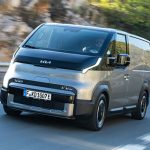
Volkswagen is making the all-electric ID. family even more sustainable – including the choice of materials for the interior.
During the course of this year, the ID.3, ID.4, ID.5 and ID.7 will receive selected innovations that were first used in mass production in the ID. Buzz. As one example of this, VW uses Seaqual yarn as a seat cover material. This is made from 10 per cent collected marine debris and 90 per cent recycled PES yarn. The CO2 emissions from production are almost one third lower than for conventional cover materials.
Silke Bagschik, Head of Product Line E-Mobility, explains: “Through the widespread use of recycled materials and the animal-leather-free interior in our ID. models, we are further improving the eco-balance of our vehicles – with high demands on haptical and long-term quality. The feedback from our customers confirms that we will continue to expand these sustainable approaches in the future.”
ID. Buzz as a pioneer for recycling innovations
Volkswagen already uses a large number of new materials in the interior of the ID. Buzz, and these will now be introduced in the other models of the ID. family step-by-step. For example, alternative materials made of ocean plastic or old PET bottles (to be exact, 63 size 500 ml bottles) are used in numerous places in the interior of the new Volkswagen bus. The outer material of a seat cover is made of Seaqual yarn, which is comprised of 10 per cent collected marine debris and 90 per cent recycled PES yarn. This saves 32 per cent of CO2 emissions compared with conventional surface materials. In seat covers with ArtVelours Eco, the recycling share is 71 per cent.
In addition, the surfaces of the headliner and floor covering in the ID. Buzz are made completely from recycled polyester. Recycled plastics can also be found in the insulating layer of the carpet. The same applies to components such as the underbody cladding and the wheel housing liners.
In addition, Volkswagen no longer uses chrome for trim parts on the doors, instrument panel and steering wheel clip of the ID. Buzz because the production of chrome harms the environment. The chrome has been replaced by a liquid paint with chrome look that has a bio-based binder. Some of these recycling innovations from the ID. Buzz will now be introduced in the ID.3, ID.4, ID.5 and ID.7.
Recycled materials as a full-value alternative
Recyclates are processed used materials that are applied to new products. In the case of plastics, such materials include PET bottles and old fishing nets. These plastic waste materials are processed into granulates and can then be reused.
Depending on requirements, components can be made using only a small share of recycled materials or completely from them. In the interior, the reused materials must always offer the same characteristics as conventional ones. This applies to both their look and feel as well as to their durability and longevity.
By 2030, Volkswagen is aiming to cut carbon emissions per vehicle by 40 per cent, and the company plans to have a climate-neutral balance by 2050 at the latest. To achieve these goals, VW analyses and optimises the complete vehicle life cycle: from basic research, through development and production, up to end-of-life recycling. Volkswagen also strives to realise closed material cycles for all the raw materials used.