
Every EV looks great on a brochure. The real question is: what happens when you actually drive it until the battery dies?
That’s exactly what the 2026 NAF El Prix summer range test set out to answer. The Norwegian Automobile Federation (NAF) and motoring magazine Motor ran 24 electric cars from Oslo until the batteries gave up. No tricks, no shortcuts, just real roads and real driving.
The NAF EV range test is widely considered the world’s largest real-world EV range event. It runs twice a year, once in summer and once in winter, making it one of the most consistent and trusted benchmarks in the industry.
This summer’s edition took place on June 3, 2026. Conditions were about as good as they get: dry roads, temperatures between 12 and 18°C (54 to 64°F). That made it the ideal test to see how well today’s EVs keep their WLTP promises.
The results were, overall, reassuring. But two cars stood out at opposite ends of the scale, and one of them will genuinely surprise you.
How Does the NAF El Prix Range Test Actually Work?
The NAF El Prix doesn’t just measure which EV travels the furthest. It measures which EV is most honest about its range. Each car starts with a full charge and is driven at legal speeds until the battery is completely empty.
The winner isn’t the car with the longest absolute range. It’s the car that comes closest to, or exceeds, its official WLTP range figure. WLTP stands for Worldwide Harmonised Light Vehicle Test Procedure: it’s the standardised laboratory test used across Europe to rate EV range.
his approach matters for buyers. You’re not choosing between cars based on size or battery capacity. You’re finding out which manufacturers are being straight with you.
The test runs twice a year, which is what makes it so valuable. You’ve probably already heard about the punishing NAF winter EV test, where freezing temperatures bite hard into range. The summer edition is the flip side: the most favourable conditions a European EV owner is likely to experience.
In 2026, 24 models lined up. Here’s what happened.
BMW iX3: The Car That Went Furthest
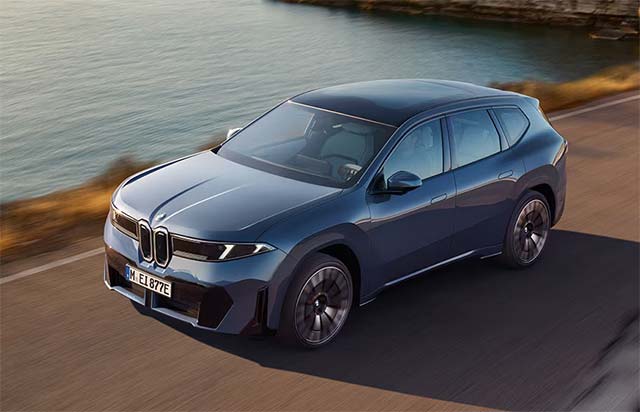
The headline number belongs to the new BMW iX3 50 xDrive. It covered 781 km (485 miles) on a single charge, more than any other car in the test. It also edged past its own official WLTP figure of 770 km by 1.5%.
That’s a strong result for what is genuinely a new-generation car. The iX3 is BMW’s first vehicle on its Neue Klasse platform. You can read more about what makes the BMW iX3 Neue Klasse architecture different from its predecessor.
To put the 781 km result in context: it’s well short of the all-time summer distance record. That still belongs to the Lucid Air, which hit 832 km in the summer 2025 edition of the same test. This year, Lucid came back with the Gravity SUV. It managed 720 km but fell 3.7% below its stated figure.
The original iX3 holds a different kind of record. Back in the 2021 summer test, it beat its own WLTP rating by an extraordinary 23.5%. The new model didn’t match that deviation, but it didn’t need to. Covering 781 km and beating its official number is a strong opening statement for a brand-new platform.
NAF also noted that the iX3 was on track to go even further during the day, but evening mountain conditions eventually levelled things out.
Which EV Was Most Honest About Its Range?
The Xpeng X9 beat its official WLTP range of 580 km (360 miles) by 11.4%, covering 646 km (401 miles) in real-world driving. That’s the largest positive deviation of any car in the 2026 summer test. For a large electric minivan, it’s a genuinely impressive result.
NAF senior communications adviser Nils Sødal said the X9 was clearly the standout of the entire test on that metric.
This isn’t the first time Xpeng has done this. In the 2023 NAF summer test, the Xpeng G9 SUV exceeded its rated range by 13%. There’s a clear pattern: Xpeng rates its cars conservatively, and real-world drivers benefit from it.
It’s worth understanding why this matters. When a manufacturer over-promises on range, drivers feel anxious and disappointed in real use. When a car quietly over-delivers, it builds trust. The X9’s result means buyers can feel confident the car will live up to its numbers, and then some.
The runner-up for positive deviation was the Kia EV2 at +5.4%, followed by the Mercedes-Benz GLB 350 at +5.3%.
The Full 2026 NAF El Prix Results
Here are all 24 cars, ranked from the highest to the lowest real-world range. The deviation column shows how each car compared to its official WLTP figure.
According to the official NAF results, most of the field stayed within a tight ±5.7% band, which is a solid sign that WLTP figures are broadly reliable in summer conditions.
One curiosity: the Toyota bZ4X matched its official figure of 506 km exactly, a 0% deviation. However, the driver noted that the car’s own display showed 0% battery remaining 18 km before it actually ran dry. NAF drives every car to absolute zero, which the Toyota allowed them to do despite the early warning.
| Model | WLTP Range | Real-World Range | Deviation |
| BMW iX3 50 xDrive | 770 km | 781 km | +1.5% |
| Lucid Gravity | 748 km | 720 km | -3.7% |
| Mercedes-Benz CLA | 708 km | 675 km | -4.7% |
| Mercedes-Benz GLC 400 | 643 km | 665 km | +3.4% |
| Xpeng X9 | 580 km | 646 km | +11.4% |
| Polestar 3 | 625 km | 601 km | -3.8% |
| Mercedes-Benz GLB 350 | 563 km | 593 km | +5.3% |
| Toyota C-HR+ | 607 km | 587 km | -3.4% |
| Kia EV4 | 594 km | 575 km | -3.3% |
| Hyundai IONIQ 9 | 600 km | 566 km | -5.7% |
| Smart #5 | 540 km | 556 km | +3.0% |
| Kia EV5 | 520 km | 509 km | -2.1% |
| Toyota bZ4X | 506 km | 506 km | 0% |
| MG S6 | 485 km | 502 km | +3.4% |
| Citroen E-C5 Aircross | 513 km | 500 km | -2.5% |
| Mazda 6e | 479 km | 485 km | +1.2% |
| BYD Atto EVO | 470 km | 460 km | -2.1% |
| MG IM6 | 505 km | 446 km | -11.7% |
| Changan Deepal S05 | 445 km | 431 km | -3.1% |
| Kia PV5 | 412 km | 420 km | +1.8% |
| Hyundai Inster | 360 km | 373 km | +3.5% |
| KGM Musso | 379 km | 369 km | -2.6% |
| Dongfeng Vigo | 340 km | 348 km | +2.3% |
| Kia EV2 | 308 km | 325 km | +5.4% |
Which EV Disappointed the Most?
The MG IM6 fell 11.7% short of its official WLTP figure, returning just 446 km against a claimed 505 km. That’s the worst negative deviation in the entire 2026 summer test.
What made it more surprising is that another MG in the test, the MG S6, posted a positive deviation of +3.4%. Two cars from the same brand, at opposite ends of the honesty scale in the same test. NAF’s Nils Sødal said the team was genuinely caught off guard by the gap, especially given the S6’s solid performance.
The MG IM6 is a Chinese-market sedan sold in Europe. It’s not available in the US. But for European buyers considering it, this result is worth knowing. A nearly 12% real-world shortfall in favourable summer conditions is a meaningful gap.
It’s a reminder that buying on WLTP figures alone isn’t enough. Always check independent real-world test results before you commit.
What Do These Results Mean If You’re Buying an EV?
Summer WLTP figures are broadly trustworthy for most modern EVs, as long as you’re driving in mild temperatures on dry roads. The 2026 NAF test confirms that the majority of cars stay within a ±6% range of their official numbers in good conditions.
That’s genuinely good news for buyers. It means the range printed on a spec sheet isn’t wildly optimistic in summer. If a car says it’ll do 500 km, you can reasonably expect somewhere between 470 and 530 km on a warm, dry day.
But conditions change. According to independent 2026 benchmarks, real-world EV range at motorway speeds drops to around 75-82% of the WLTP figure. Winter brings a further hit. In the NAF winter EV test, the same cars can lose 20-30% or more of their stated range when temperatures drop below freezing.
So here’s the practical takeaway. Use summer real-world test results like this one as your baseline. Then factor in how you actually drive: your typical speeds, your climate, and how often you’ll be driving in cold weather. That gives you a far more honest picture than any brochure ever will.
If you’re weighing up specific models, it’s also worth checking head-to-head comparisons. We’ve done a deep dive into the BMW iX3 vs Mercedes GLC Electric decision, for example, which is especially relevant given both models appeared in this test.
Wrapping Up
The 2026 NAF El Prix summer test delivered three clear lessons.
First, the BMW iX3 is a genuine long-range leader. At 781 km on a single charge, it went further than any other car in this year’s test and still edged past its own official figure.
Second, Xpeng is building a reputation for under-promising and over-delivering. The X9’s +11.4% deviation is exceptional, and it follows the same pattern the brand showed with the G9 back in 2023.
Third, most modern EVs are keeping their WLTP promises in summer conditions. That’s reassuring for anyone still on the fence about making the switch.
The real challenge for EVs isn’t summer driving. It’s winter. If you want to know how these same cars handle the cold, check out our coverage of the NAF winter EV test results to get the full picture before you buy.


