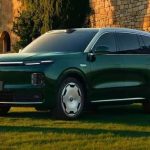
Kia Motors has introduced Korea’s first plug-in car, the Ray EV, an all-electric city car with lively performance and a range of up to 139 km (86 miles) on a single charge.
For supply exclusively to the domestic Korean market, the Kia Ray EV shares the same dimensions as the 1.0-liter gasoline powered Ray CUV (crossover utility vehicle) that was launched last month.
The front-wheel drive Ray EV is powered by a 50kW electric motor and a high-capacity 16.4 kWh lithium ion polymer battery pack that is engineered for a 10-year life cycle and skillfully packaged under the rear seat and cabin floor.
Although the Ray EV weighs 187 kg more than the gasoline model, the electric motor’s generous torque – 167 Nm (an increase of 77%) – ensures responsive performance. The EV’s acceleration is brisker than the gasoline models (0-to-100 km/h in 15.9 seconds), while top speed is 130 km/h (81 mph). Recharging times are six hours using a 220V household supply and just 25 minutes in fast-charge mode.
The Ray EV’s automatic transmission offers the driver a choice of two modes while in ‘D’ drive. ‘E’ (or ‘eco’) mode optimizes the delivery of the motor’s torque to achieve minimum battery consumption and maximum driving range. ‘B’ (or ‘brake’) mode can be selected when driving downhill on highways and on mountain roads to maximize braking power.
Bearing the same striking exterior styling as its gasoline cousin, the Kia Ray EV has four small distinguishing points. A flap in the front radiator grille covers an electricity inlet for a 220V supply for the slow recharge mode, another inlet (for the fast recharge mode) is fitted in the same location as the fuel intake of the regular models, special decals on each front door proclaim the ‘Zero Emissions EV’ message and super-smooth 14-inch alloy wheels improve aerodynamic performance by minimizing drag.
Inside, the Ray EV features a unique instrument cluster, displaying electric motor operation, battery status and distance to recharge. It is also equipped with the first-ever EV-specific navigation system that features a 7-inch screen and provides crucial information for EV drivers such as the nearest locations of the slow/fast recharging stations. The display shows a circular shaped area in which the model can travel with its current level of battery power, so that drivers can see which destinations are reachable without a recharge.
Currently there are 500 slow/fast recharge stations in Korea, and the government plans to increase that figure to 3,100 stations by the end of 2012.
The Kia Ray EV embodies numerous innovations. The electric motor achieves 93% efficiency, which is the best in its segment. The lithium ion polymer battery’s cell is optimized and highly integrated, which has enabled its weight to be reduced by 13% and its energy density to be increased by 15% compared to competitors’ systems.
The on-board charger, current inverter, high-low voltage converter and EV-specific VCU (vehicle control unit) each features advances over previous equipment.
Ray EV is also equipped with a new type of regenerative braking system featuring an Active Hydraulic Booster that utilizes the electric motor, instead of the gasoline engine in the regular model, to create hydraulic pressure for the brake system. The result is consistent brake pedal force throughout a wide variety of driving conditions and the ability to harvest excess energy and use it to recharge the car’s battery.
Unlike regular gasoline vehicles, Ray EV generates no engine noise, which can be a potential problem with pedestrians being unaware of the approaching car. To prevent accidents, Kia has fitted Ray EV with a VESS (Virtual Engine Sound System). When driven at speeds below 20 kph (12 mph) this system delivers a mixture of recorded gasoline engine noises, which are also emitted whenever the car is backing up.
Japan and the USA are already considering the introduction of a legal requirement for EVs to have a virtual engine sound, and Kia has taken the first step to commercialize this system in order to anticipate the global industry’s trend.
To ensure that the Ray EV is as safe as gasoline cars, it is equipped with six air-bags, and electronic stability features – VDC (Vehicle Dynamics Control) and HAC (Hill Assist Control, to prevent roll-back) – as standard.
During 2012, Kia is planning to manufacture 2,500 units of the Ray EV, which will be provided to government departments and public offices as part of Kia’s long-term real-world research and development program to provide environmentally friendly transport to Kia customers around the world during the next decade.
Kia Ray EV / Technical Specification
DIMENSIONS
Length 3593 mm Width 1595 mm
Height 1700 mm Wheelbase 2520 mm
Kerb weight 1185 kg
POWERTRAIN
Electric motor 50 kW
Max power 68 ps Max torque 167 Nm (17.0 g/km)
BATTERY
Power 330V Lithium ion polymer
Capacity 16.4 kWh
Charge time 6.0 hrs (slow) / 25 minutes (fast)
PERFORMANCE
0-to-100 km/h 15.9 sec (to 62 mph)
Max speed 130 km/h (81 mph)
Max range 139 km (86 miles)[wzslider height=”400″ lightbox=”true”]