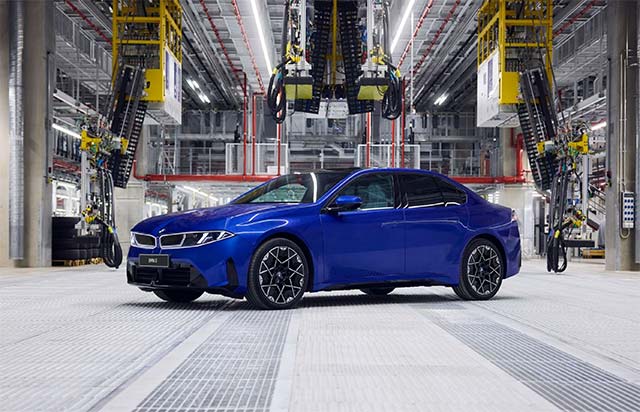
BMW Group Plant Munich is entering a pivotal phase in its electrification strategy, with series production of the next-generation BMW i3 scheduled to begin in August. The model represents the second vehicle in BMW’s Neue Klasse lineup and signals the broader rollout of this new architecture across the company’s global production network.
The Munich facility has undergone extensive modernization to support this transition, evolving into a highly efficient, flexible, and digitally integrated production hub designed specifically for electric mobility.
A Fully Electric Future by 2027
BMW plans to convert Plant Munich into an all-electric production site by 2027. This shift is expected to significantly improve operational efficiency while reducing production costs. With the introduction of the Neue Klasse i3, overall manufacturing costs at the plant are projected to drop by an additional 10 percent—bringing them below the level of the current vehicle generation.
This transformation is backed by an investment of approximately €650 million, aimed at upgrading infrastructure, implementing advanced technologies, and scaling digital capabilities.
BMW iFACTORY: Driving Efficiency and Digitalization
At the core of the plant’s transformation is the BMW iFACTORY framework, which focuses on efficiency, sustainability, and digitalization. The approach redefines the entire production value chain—from suppliers to finished vehicles—leveraging AI, automation, and data-driven optimization.
Key highlights include:
– AI-powered quality control: Advanced camera systems inspect components and vehicle surfaces with precision, detecting even minor deviations.
– Digital twins: Virtual simulations were used to design and optimize production systems, especially in the new body shop.
– High automation rates: Up to 98% automation in body assembly with 800 industrial robots streamlining joining processes.
– Connected production systems: Vehicles transmit real-time data on thousands of features during assembly, enabling continuous quality monitoring.
Advanced Manufacturing Across All Production Stages
The Munich plant integrates cutting-edge technologies across every stage of manufacturing:
– Press shop: Highly automated lines produce thousands of steel and aluminum components daily, with standardized tools across BMW’s global network improving efficiency.
– Body shop: A newly built facility reduces process complexity while increasing output through automation and AI-assisted inspection.
– Paint shop: Energy-efficient systems, including electrically powered exhaust purification and water-saving cycles, enhance sustainability.
– Assembly: Fully digitized workflows, ergonomic workstations, and automated quality checks improve both productivity and working conditions.
Smarter Logistics and In-House Expertise
Logistics operations at the plant have been reengineered for efficiency, with around 70% of parts expected to be delivered directly to assembly lines in the future. Automation will handle approximately 60% of supply processes, supported by driverless transport systems and centralized digital control.
A unique feature of the Munich site is its in-house seat manufacturing facility, which serves as both a production unit and a competence center for innovation and quality assurance across BMW’s global network.
Strengthening Regional EV Supply Chains
BMW is also reinforcing its regional supply chain to support electric vehicle production. High-voltage batteries for the Neue Klasse i3 will be produced at a new facility in Irlbach-Straßkirchen, while next-generation e-motors will come from the company’s long-established plant in Steyr, Austria.
This “local for local” strategy enhances efficiency, reduces logistics complexity, and ensures consistent quality across production.
A New Era for BMW Manufacturing
With the upcoming launch of the Neue Klasse BMW i3, Plant Munich is set to become a cornerstone of BMW’s electric future. The combination of advanced automation, AI-driven processes, and a fully electric production focus positions the facility as a benchmark for next-generation EV manufacturing.
As additional Neue Klasse models—including a future BMW i3 Touring—are introduced, the Munich plant will play a central role in shaping BMW’s global electrification strategy.